




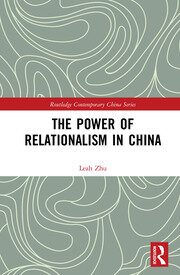
Introduction
Part I: The Roots of Relationalism in Chinese History
1. Some Starting points
2. The "Universal Order"
3. The Traditional Chinese Family
4. Relationalism Meets Foreign Challenges
5. Relationalism Triumphs
Part II: The Roots of Relationalism in Chinese Belief systems
6. Some Starting Points
7. Confucius: Relationalism in Human Society
8. Daoism: Relationalism in the Cosmos
9. Buddhism: Relationalism in Zen
10. Unification under Relationalism
Part III: " Guanxi"-- The Sociological Roots of Relationalism
11. Some Starting Points
12. Qin qing (Kinship Emotions)
13. You qing (Friendship Emotions)
14. Ren qing (Generic Human Emotions)
15. Guanxi Opens Access to Resources
16. "Face" and Reciprocity
17. "The Cat-and-Mouse Game"
Part IV: The Psychological Roots of Relationalism
18. Some Starting Points
19. Relational Human Nature
20. The Chinese "Heart"
21. Cognition and Emotion
22. Relational Thinking in the Chinese Language
23. Development of "Selfhood" Part V: Relationalism in the 21st Century
24. Some starting points
25. The CCP Factional Politics in the 21st Century
26. The CCP-State Relationships in the 21st Century
27. The CCP-Chinese Society Relationships in the 21st Century
28. A Judiciary System with "Chinese Characteristics"?
29. On the World Stage: China’s Relational Diplomacy in the 21st Century
Epilogue: the Chinese Family in the 21st Century
Biography
Leah Zhu is a retired psychotherapist and academic at the University of Washington, USA. Her publications include A Comparative Study of Youth Mental Health Education in the United States and China (2015) and Cultivating the World of Self (1997).
