





1st Edition
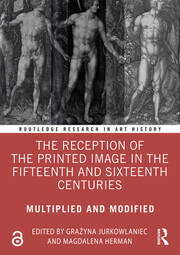
The Reception of the Printed Image in the Fifteenth and Sixteenth Centuries Multiplied and Modified
Introduction: People Between Multiplied Things and Modified Images
Part 1: Things
1. Multiplicity and Absence: The Negative Evidence of Interactive Prints
Suzanne Karr Schmidt
2. Playing with Destiny: Three Late Fifteenth-Century Uncut Playing-Card Sheets from Florence and Urbino
Loretta Vandi
3. Cultivating Designs: Early Ornamental Prints and Creative Reproduction
James Wehn
4. Gillet and Germain Hardouyn’s Print-Assisted Paintings: Prints as Underdrawings in Sixteenth-Century French Books of Hours
Maureen Warren
5. A Passion for Prints: Netherlandish Engravings in an Early Sixteenth-Century Prayer Book
Olenka Horbatsch
Part 2: People
6. Eroticism under a Watchful Eye: Censorship and Alteration of Woodcuts in Ovid’s Metamorphoses between the Fifteenth and the Sixteenth Centuries
Giuseppe Capriotti
7. Limitations of the Reception and Consumption of Illustrations in Chronica Polonorum by Maciej of Miechów (Cracow, 1521)
Karolina Mroziewicz
8. A Foreign Affair. Thomas Gemini and his Booklet of Moresque Designs
Femke Speelberg
9. Speaking Images and Speaking to the Images: Inscriptions in Religious Prints Published by Antonio Lafreri
Alexandra Kocsis
Part 3: Images
10. Saint George from Greater Poland: Complexities of the Reception of Albrecht Dürer’s Engraving
Joanna Sikorska
11. Changing Fortunes: Dürer’s Nemesis and the Beham Brothers
Małgorzata Łazicka
12. The Set of the Four Elements by Hendrick Goltzius and the Use of Engravings in the Seventeenth Century
Júlia Tátrai
13. Different Confessions, Different Visions of Heaven? Visual Eschatology, Cross-Confessional Conformity and Confessional Identity Marking in the Picture Motet The Adoration of the Lamb and in Its Reception
András Hándl
14. Prints and the Beginnings of Global Imagery
Jean Michel Massing
Biography
Grażyna Jurkowlaniec is a professor at the Institute of Art History at the University of Warsaw.
Magdalena Herman is a PhD candidate at the University of Warsaw.
"Our editors deserve praise for compiling an engaging set of essays, carefully grouped for thematic unity. Topics address prints across Europe. The pool of contributors is correspondingly diverse, introducing many new voices from central and eastern Europe."
--Historians of Netherlandish Art Reviews
