




1st Edition
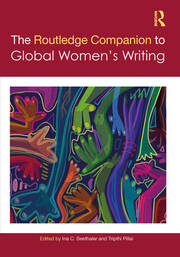
The Routledge Companion to Global Women's Writing
Introduction: Centering Peripheralized Spaces and Voices
Part I: Politics and Conflict
Reading the Cold War of the 1970s through the Lens of Women’s Press: The Case of Women’s Voice Magazine in Turkey,
Gamze Sarıtunalı Elverişli and Faika Çelik
Dolly Mixtures: A Women’s Writing Group amidst Conflict,
Ashley M. Morin
Vietnamese American Women’s Writing: Claiming the Space in-between,
Luna Chung
Heroine Chicks: Reporting for Duty on the Front Page,
Farrah Hersh
Social Media and Women in Politics,
Devjani Roy
How Can the Personal Stories of Twenty-first-century Refugee and Migrant Girls Be
Heard? The Dilemma of Coming to Voice on Digital Platforms,
Jessica Sanfilippo-Schulz
Part II: The Body and Resistance
Individual and Communal Resistance in Contemporary Reproductive Dystopias,
Raluca Andreescu
Writing the Dalit Transwoman: Caste and Queer Intersectionalities in India,
Natasha Negi and Antara Chatterjee
A Conversation about Transfeminism with Mijke van der Drift and Nat Raha
Part III: Language and Creative Writing
Reshaping Polynesian Narrative: Chantal Spitz and Her Audacious Counter-Discourse against Colonial Oppression and Factitious Myth,
Sandrine Teixidor
Voices of Mia Farang: Thai Lower-Middle-Class Women’s Storytelling from the Late
1990s-2017,
Pattarat Phantprasit
Claudia Piñeiro’s Un comunista en calzoncillos: A Father’s Non-Hegemonic Masculinity
and Manliness,
Carolina Rocha
Translatorship Empowering Feminism: Xue Qiying’s Translation of and Commentary
on Milian hunshi [Milian’s Marital Story] (1924),
Wenxi Li
Complaining of Work in Blogs: Women Teachers’ Rhetorical Labour of Denouncing Injustice,
Momoyo Mitsuno
From Jane Eyre to Xuela Claudette Richardson: Reading Charlotte Bronte through
Jamaica Kincaid, Manisha Basu
Caught in-between: Chinese Feminism in Contemporary Script Writing for TV Dramas
Kacey Jianwen Liu
Women’s Language at the Intersections of Linguistic Change and Identity,
Becky Childs
Part IV: Nature and Ecofeminism
Magic and Terror in Easterine Kire’s Ecological Fiction: Indigenous Naga Ecofeminism
and Conservation Ethics,
Lucy Keneikhrienuo Yhome and Meghna Christina Mudaliar
Temporality, Cyclones, and Planetary Fiction: The Case of Mutiny by Lindsay Collen
Gargi Binju
Global Women’s Writing and Eco-Cosmopolitanism,
Sukanya Gupta
Part V: Artistic Expressions and Women’s Empowerment
Writing/Righting the Indian City: Graffiti and the Gendered Semiotics of Excess,
Sanchita Khurana
Interpreting Female Bodies, Envisaging Female Identity: Investigating Visual Culture and Orality in Women-Centric Sanjhi in North India,
Muskan Dhandhi and Suman Sigroha
Hilarious, Sad and Didactic: Hanane el-Fadili’s Tribute to Older Unmarried Women in Her Comedy Show The Daughters of Si Taher,
Sarali Gintsburg
Biography
Ina C. Seethaler received her Ph.D. in English with a graduate minor in Women’s and Gender Studies from Saint Louis University. She serves as Associate Professor and Director of Women’s and Gender Studies at Coastal Carolina University in Conway, SC, USA. Her research connects gender, migration, and literature. She has published, among others, in Frontiers: A Journal of Women’s Studies, Women’s Studies: An Interdisciplinary Journal, a/ b: Auto/Biography Studies, Feminist Formations, and American Studies. Her book Lives Beyond Borders: US Immigrant Women’s Life Writing, Nationality, and Social Justice on immigrant women’s life writing, nationality, and social justice was published in 2021.
Tripthi Pillai holds a Ph.D. in English from Loyola University Chicago. A Professor of English at Coastal Carolina University in Conway, SC, USA, she serves as Associate Dean in the College for Humanities and Fine Arts. Her recent publications include “Mourner-Confessors: The Masala Intercommunity of Women in Rudaali and Hamlet” in postmedieval; “Rash’s Shakespearean Ecologies: Autopoietic and Allopoietic Remediations of Serena in Macbeth” in Summoning the Dead: Essays on Ron Rash; “Cute Lacerations in Doctor Faustus and Omkara” in The Retro-Futurism of Cuteness; and “Shoe Talk and Shoe Silence in The Two Gentlemen of Verona” in Object Oriented Environs.
