





1st Edition
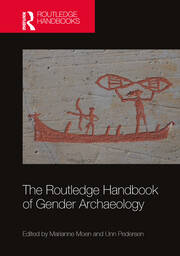
The Routledge Handbook of Gender Archaeology
List of figures and tables
List of contributors
Preface
Introduction: framing the archaeology of gender
1. Framing gender in archaeology: snapshots from a vast and varied field, Marianne Moen and Unn Pedersen
Section 1: Introducing feminist pedagogies, methodologies, and potentials
2. Feminist archaeological pedagogies, Hannah Cobb
3. Feminist archaeology for the present: Maintenance activities and social caring, Laia Colomer, Paloma González-Marcén, and Marina Picazo
4. Posthumanist-feminist archaeology: A becoming, Rachel Crellin
5. The influence of women and feminist thinking on the development of an ‘Emotional Archaeology’, Jane Eva Baxter
6. Intersectional thinking in archaeological analysis, Anna S. Agbe-Davies
7. Gendered technology and technology that genders, Catherine J. Frieman
Section 2: Reviewing the impacts of feminist thought
8. Gender in the Middle Ages: Marginalisation and mainstreaming in Later Medieval Archaeology, Roberta Gilchrist and Karen Dempsey
9. The [Matthew] Matilda Effect in archaeology: Recovering women for the history of the discipline, Margarita Díaz-Andreu
10. Uncloaking non-male agency in rock art production and use, Kelley Hays-Gilpin and Linea Sundstrom
11. Gender, gender perspectives and the division of labour in the European Middle and Upper Palaeolithic, Jennifer C. French
12. Gender in the European Bronze Age: Rethinking the universal binary in Northern Europe, Mark Haughton
Section 3: Marking identities and personhood in life and death
13. Intersections between gender, personhood and kinship, Chris Fowler
14. The construction, performance, and effects of gender: Reflection on the evidence from prehistoric burials, Marie Louise Stig Sørensen
15. Broken bodies: Gender, fragmentation, and social transformation in prehistoric Cyprus, Diane Bolger
16. Memory and temporality: A Viking Age example, Elisabeth Arwill-Nordbladh
Section 4: Addressing marginalisation through feminist views
17. Archaeological approaches to gendered institutions: Tracing continuities in pre- and post-independence Ireland, Laura McAtackney
18. From landscapes to kinscapes: Engendering Métis relations, Dawn Wambold and Kisha Supernant
19. Gender, intersectionality, and restitutive justice, Dawn M. Rutecki and K. Anne Pyburn
20. Indigenous futures in archaeology, Kristen D. Barnett
Section 5: Envisaging gendered lives
21. Gender and the archaeological sciences: Gender, mobility and kinship in European prehistory, Penny Bickle
22. Caring for the house and the community: Women’s agency in western Sicily, 8th – 5th century BC, Meritxell Ferrer
23. Imagining and gendering the past: Public Outreach as a Research Method, Unn Pedersen and Elna Siv Kristoffersen
24. The archaeology of motherhood, Katharina Rebay-Salisbury
25. Other pasts: Feminist archaeology, maintenance activities, and reconceptualization, Sandra Montón-Subías
Section 6: Bodies, politics and feminist rethinkings
26. The skeletal body as archaeology: Osteological sex and gender archaeology, Taylor Peacock
27. Bodies past and present: The political side of embodied approaches to Viking Age lives, Marianne Moen
28. Merely Naturecultural: Notes on Ontology of Sex/Gender in Ancient Egypt, Uros Matic
Index
Biography
Marianne Moen is Head of the Department of Archaeology at the Museum of Cultural History, University of Oslo, Norway.
Unn Pedersen is Associate Professor at the University of Oslo, Norway.
