





1st Edition
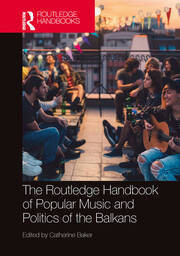
The Routledge Handbook of Popular Music and Politics of the Balkans
List of figures
List of tables
List of contributors
Acknowledgements
Introduction: thinking politically with popular music of the Balkans
Catherine Baker
PART I: Region and ‘the Balkans’ in practice
1 The emergence of the world music concept in the Balkans: early and more recent steps
Iva Nenić and Tatjana Nikolić
2 Lăutari, music-making, and social practices of live performance in southern Romania
Margaret Hiebert Beissinger
3 Politics, activism, and Romani music: interpreting trends in Serbia, North Macedonia, and Bulgaria
Carol Silverman
4 Electronic dance music festivals in Romania: a case of reversed Balkanism
Ruxandra Trandafoiu
5 The Balkans in the Eurovision Song Contest
Dean Vuletic
PART II: Reviving and revising histories
6 Reviving nineteenth-century Wallachian and Moldavian urban music
Florin Iordan
7 Bosnian discography before World War I: recording artists, repertoire, and politics
Risto Pekka Pennanen
8 The development and institutionalization of Albanian music during the communist period
Erjada Progonati
9 ‘Please, Mile, don’t sing anything political’: Turbo-folk, politics and the restoration of capitalism in Serbia
Aleksandar Momčilović
10 The artistic units of the Army of the Republic of Bosnia-Herzegovina (ARBiH), popular patriotic music production, and the question of national identity in Bosnia-Herzegovina during the war from 1992 to 1995
Petra Hamer
11 The politics of performance and popular music in Turkey
Gonca Girgin and Merve Eken Kucukaksoy
12 Songs after genocide: music of hatred and triumphalism
Hariz Halilovich
PART III: Defining ‘the popular’
13 Popular music and the ‘mass culture’ of socialist Yugoslavia in the eyes of critics and theorists
Reana Senjković
14 To traghoudhi tou nekrou adelfou: Mikis Theodorakis’ autoethnographic and political perspectives in a contemporary Greek laiki tragedy
Maria Athanasiou
15 Groovy aesthetics, intercultural perspectives, and the rise of Ethnojazz in Bulgaria
Claire Levy
16 The sound of distinction: social class and political orientations as predictors of music taste in Croatia
Krešimir Krolo and Željka Tonković
17 Popular culture and pandemic politics: musically mitigating COVID-19 in 2020 Bulgaria
Donna A. Buchanan
PART IV: Political economies and political aesthetics
18 Women and gender in the early record industry in former Yugoslavia: snapshots of singers, a composer, industrial manpower, and gendered humour
Naila Ceribašić
19 The musical film genre in Romanian cinema: from melodramatic socialism to postmodern irony
Doru Pop
20 In search of national style: Yugoslav popular music between the Balkans and the Mediterranean
Anita Buhin
21 How do you solve a problem like Korea?: Laibach and the poetics of politics
Irena Šentevska
22 White power music and antifascist rap: anti-system music in Greece during the 2009–21 crises
George Kordas
23 Popular culture or resistance?: rap and politics in Turkey since the 1990s
Ozan Eren
PART V: Margins of national belonging
24 The neopontic music of Greece: traditions of modernity and the a/politics of identity
Ioannis (Yannis) Tsekouras
25 Just Mediterranean, please: Croatian neoklapa music and national (Re)positioning
Eni Buljubašić
26 Between the virtual and the make-believe: anthems, bells, and a performance for Liberland along the Croatian and Serbian Danube
Ian MacMillen
27 Queering Bulgarian pop-folk: hybridity, gaga feminism, and defamiliarization in chalga
Elitza Kotzeva
28 Understanding gender and sexuality in sevdah as a popular genre
Damir Imamović
PART VI: Globalizing postcoloniality and race
29 Black popular musics in Yugoslavia
Linda Cimardi
30 ‘The Blacks of Yugoslavia’: racialization, resistance, and Kosova’s ‘MTV generation’
Jane C. Sugarman
31 Br/otherhood and dis/unity: racial differentiations across the former Yugoslav region and Serbian diaspora communities in Serbia’s two major music festivals
Jelena Gligorijević
32 What is this ‘Balkan’ in Balkan popular culture?: Stuart Hall’s sociology of popular culture, identity and race through analogy and connection
Catherine Baker
33 From AfroGreeks to the Black Mediterranean: de/facing whiteness in the rap of Negros tou Moria
Penelope Papailias
PART VII: New technologies and transformations
34 Stacking nightingales, male tears, and albums of the year: how the Balkans and other scales of domestic hip-hop are crafted
Owen Kohl and Dragana Cvetanović
35 ‘Popularity’ in the YouTube era: an anthropological analysis of music trending on Serbian YouTube and IDJTV
Marija Ajduk
36 From turbo music to turbo politics: pop-folk and anti-establishment politics in Bulgaria
Dragomir Stoyanov and Elza Ibroscheva
37 ‘Dajem ti srce, zemljo moja’: patriotic music and national unity in Croatia in the aftermath of the 2020 Petrinja earthquake
Ivana Polić
38 ‘And then we sang’: affective communities and Russian/EU cultural diplomacy in Moldova’s Victory Day and Europe Day, 2022
Domenico Valenza
39 Queer Yugosphere: queer audiences and popular music in the post-Yugoslav space
Mišo Kapetanović
Index
Biography
Catherine Baker is Reader in 20th Century History at the University of Hull.
