





1st Edition
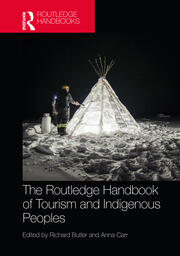
The Routledge Handbook of Tourism and Indigenous Peoples
1. Introduction: Revisiting Tourism and Indigenous People
Anna Carr and Richard Butler
Section 1: Indigeneity
2. “Are We Not All Indigenous?” Negotiating Indigeneity in Greenlandic Tourism
Carina Ren
3. The Constant Creation of Aboriginality: A Commentary on Indigenous Being and Becoming
Keith Hollinshead
4. A Critical Realist Appraisal of Indigeneity: The Case of Miao Peoples in a Tourism Village in China
Jianhong Zhou and Johan Edelheim
5. Power, Policies, and Cultural Sensitivity in Ainu Tourism: Indigenous Involvement in and Control over Tourism Developments in Hokkaido, Japan
Mayumi Okada and Johan Edelheim
Section 2: Indigenous
6. Decolonising Indigenous Tourism: Reconciliation, Truth-Telling, Whiteness and “Welcome to Country” in Australia
Freya Higgins-Desbiolles
7. Learn, Teach, Heal: Indigenous Tourism as a Site for Reclaiming and Becoming
Helen Jennings
8. “Come and Know a Little about Your Own Backyard”: Transformative Learning Potentials through Knowledge Sharing in Indigenous Tourism in Australia
Nicole Curtin, Tracy Woodroffe and Clinton Walker
9. Tourism, Truth-Telling and Sovereignty: A Gitxaała Perspective
Caroline Butler and Bruce Watkinson
10. You Can’t Ask that! Projective Techniques Unearth Socio-Cultural Aversions towards Indigenous Tourism
Afiya Holder
11. An Indigenous Community Code of Conduct for Tourist Behaviours: Voices from the Tibet Autonomous Region, China
Xiaotao Yang, Heather Mair and Bryan Grimwood
12. Confronting Marginalisation? Gender Dynamics and Batwa Engagement with Tourism in Uganda
Brenda Boonabaana, Amos Ochieng and Christine Ampumuza
Section 3: Indigenous Alternatives
13. Doing It the 'Pacific Way': Indigenous Education and Training in the Pacific Islands
Tracy Berno, Rerekura Teaurere and Dawn Gibson
14. Stewarding Māori Taonga for Sustainable Indigenous Tourism Enterprise
Ashley Puriri and Alison McIntosh
15. Indigenising Tourism by Indigenising the Landscape: A Digital Marketing Case Study of Wagiman Ethnobiology for Tourism and Conservation
Gabrielle McGinnis
16. Conversations about Culture: The Need to Integrate Indigenous Voices into the Development of Sustainable Cultural Heritage Tourism Opportunities in the Pacific
Anne Ford, Anna Carr, Nyssa Mildwaters, Dionne Fonoti, Gregory Jackmond and Glenn Summerhayes
17. Tourism Enterprises in the South Pacific: Culturally Centered Adaptation in the face of Covid-19
Jason Mika, Apisalome Movono, Sophie Auckram, Suzanne Hepi and Regina Scheyvens
Section 4: Indigenous Knowledge and Rights
18. The Integration of Indigenous Knowledge in Canadian Protected Areas to Foster Conservation, Reconciliation, and Tourism Development
Courtney Mason, Bill Snow and Jason W. Johnston
19. Tourism Appropriation: “Taking” Land and Culture in Sámi Areas
Arvid Viken
20. An Evaluation of the New Ainu Law: Tourism Promotion Policy and Indigenous Rights of the Ainu People in Japan
Atsuko Hashimoto
21. Indigenous Hosts and Food Security: A Case Study from Simien Mountains National Park
Gebeyaw Ambelu Degarege
22. Indigenous Knowledge as an Important Contribution to the Sustainability of Geotourism and Geoparks
Martina Pásková, Taiwo Temitope Lasisi and Abraham Cáceres Cabana
23. Reflexivity on the Establishment of National Parks in the Light of the Chapter by Mason et al
Richard Butler
Section 5: Indigenous Tourism Innovations and Developments
24. Social Innovation in an Indigenous Tourism Development
Sonya Graci and Kylik Kisoun Taylor
25. Pathways to Culturally Sensitive Tourism Policies and Practices
Monika Lüthje, Emily Höckert and Outi Kugapi
26. The Upper Navua Conservation Area: Reflections on Ecotourism and Community
Kelly Bricker and Kasimiro Taukeinikoro
27. Indigenous Handicrafts Based Domestic Tourism in Bangladesh
Easnin Ara and Md Ariful Hoque
28. Indigenous Tourism in Iran
Atefeh Ahmadi Dehrashid and Zahed Ghaderi
29. Contemporary Arts and Indigenous Arts-based Tourism in West Africa
Clive Allanso and Marina Novelli
30. Don’t Worry. We Have Your Best Interests at Heart
Kelly Whitney-Gould
Section 6: Indigenous Involvement in Planning Development
31. Indigenous Tourism Association of Canada (ITAC)
Richard Butler
32. Indigenous Tourism International Framework, Rights, and Empowerment of Grassroots Organizations: Latin America and the Chilean Case
Jean-Philippe Le Moigne
33. Development of the Inaugural Queensland First Nations Tourism Action Plan 2020-2025 and the Queensland First Nations Tourism Council
Michelle Whitford, Rhonda Appo, Cameron Costello and Lisa Ruhanen
34. Reflection on Aboriginal Tourism in Western Australia: A Balancing Act of Opportunity and Challenge
Robert Taylor
35. Conclusions
Richard Butler and Anna Carr
Appendix - Noongar Indigenous Tourism Research Protocol Declarations and Recommendations
Biography
Richard Butler is Emeritus Professor of Tourism at Strathclyde University, Glasgow, Scotland. He has taught at the University of Western Ontario in London, Canada, at the universities of Surrey and Strathclyde in the UK and held visiting professorships in Australia, Austria, Italy, Hong Kong and the Netherlands.
Anna Carr (Ngāpuhi, Ngati Ruanui, Ngāruahine) is an Associate Professor, co-director of the Centre for Recreation Research and Head of Department at the Department of Tourism, University of Otago, New Zealand.
