




1st Edition
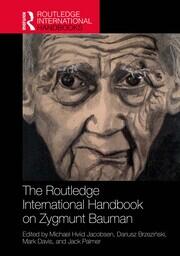
The Routledge International Handbook on Zygmunt Bauman
The Life and Work of Zygmunt Bauman: Entanglements – Interpretations – Legacies
Michael Hviid Jacobsen, Dariusz Brzeziński, Mark Davis, and Jack Palmer
Preamble to Part I: Life and Work
Chapter 1. The Traps of Engagement, Critical Sociology, and Cultural Theory: The Sociology of Zygmunt Bauman, 1953–1968
Magdalena Matysek-Imielińska
Chapter 2. Bauman in Israel: Life and Work, 1968–1971
Izabela Wagner
Chapter 3. On the Margins: Bauman at the University of Leeds, 1971–1991
Jack Palmer and Tom Campbell
Chapter 4. Globalizing Bauman: 1991–2017, and After
Peter Beilharz
Chapter 5. The Autonomous Society Needs Autonomous Individuals: The Goals of Bauman’s Sociology of Freedom
Matt Dawson
Chapter 6. "On Writing, on Writing Sociology": Zygmunt Bauman’s Poetic Imagination
Edyta Barańska
Preamble to Part II: Key Themes
Chapter 7. Zygmunt Bauman’s Theory of Culture: From the Revisionist Turn to the Nostalgic Turn
Dariusz Brzeziński
Chapter 8. Theorizing Modernity: Zygmunt Bauman’s Critical Diagnosis of the Changing Times
Michael Hviid Jacobsen
Chapter 9. Morality in the Humanist Thought of Zygmunt Bauman: From the Moral Party of Two to Cosmopolitan Responsibility
Elena Álvarez-Álvarez
Chapter 10. Zygmunt Bauman’s Sociology of Freedom: Freedom as a Differential, Ambivalent and Moral Blessing
Poul Poder
Chapter 11. Politics: In Search of Human Freedom and Dignity
Sławomir Czapnik
Chapter 12. Globalization and Its Discontents: Tourists, Vagabonds and Nomads in the Work of Zygmunt Bauman
Carlo Bordoni
Chapter 13. Community: Chasing Elusive Togetherness
Adam Chmielewski, Sławomir Czapnik, and Dorota Drałus
Chapter 14. Un-Consuming Life: Sociological Imagination for the Society of Consumers
Adam Ostolski
Chapter 15. The Power of the Past and the Future: On Nostalgia and Utopia in the Work of Zygmunt Bauman
Dariusz Brzeziński and Michael Hviid Jacobsen
Chapter 16. Deconstructions of Death: From Modern Medicine to the Postmodern Majestic Moment
Michael Hviid Jacobsen and Nicklas Runge
Preamble to Part III: Bauman in Dialogue
Chapter 17. Retrotopia and the Universality of Hope: On Bauman’s Reception and Application in Japan and South Korea
Sunjin Oh
Chapter 18. Bauman’s Critical Sociology and Postcolonial Discourse: The Arab Context
Haggag Ali
Chapter 19. Zygmunt Bauman’s Neo-Marxist Critical Theory: A Chinese Perspective
Fu Qilin
Chapter 20. Looking at Contemporary Mass Violence through Bauman’s Window
Andriana Benčić Kužnar
Chapter 21 Zygmunt Bauman and the New Mobilities Paradigm
Rodanthi Tzanelli
Chapter 22 Bauman on Nature
Arne Johan Vetlesen
Preamble to Part IV: Bauman and Contemporary Challenges
Chapter 23. Anxiety: The Liquid Modern Emotion
Matt Dawson
Chapter 24. ‘Strangers at our Door’: Zygmunt Bauman’s Evolving Perspectives on the Migration Crisis
Agnieszka Golczyńska-Grondas and Katarzyna Waniek
Chapter 25. Zygmunt Bauman on Surveillance in the Algorithmic Condition
Kamil Filipek and Anna Turner
Chapter 26 The Class, Capital and the Place We Ultimately Occupy: Homeless Tourism in Buenos Aires City
Maximiliano E. Korstanje
Chapter 27 Between Love and Community: Friendship, Intimacy and the Security-Freedom Paradox
Harry Blatterer
Chapter 28. Reclaiming Ethical Agency: Adiaphorization in a Time of Climate Crisis
Ivan Rubenstein-Gillis
Chapter 29. On Racism in Zygmunt Bauman’s Liquid Modernity
Damian Breen, Nathan Kerrigan and Yusef Bakkali
Biography
Michael Hviid Jacobsen is a Professor of Sociology at Aalborg University, Denmark. His research focuses on social theory, emotions, death and dying, palliative care, crime, literary sociology, and qualitative research methodology. He has written and published extensively on the work of Zygmunt Bauman.
Dariusz Brzeziński is an Associate Professor at the Institute of Philosophy and Sociology of the Polish Academy of Sciences, Chair of the Department of Theoretical Sociology, and a Visiting Research Fellow at the School of Sociology and Social Policy at the University of Leeds. His research focuses on contemporary social thought, sociology, anthropology, and the theory of culture. He has written and published extensively on Zygmunt Bauman’s writings.
Mark Davis is a Professor of Economic Sociology at the University of Leeds, UK. He founded the Bauman Institute in 2010 and was its director until 2020. His wider work is interested in theoretical and empirical puzzles at the intersection of economy, democracy, consumerism, and climate change. He has written and edited six volumes dedicated to Zygmunt Bauman’s work.
Jack Palmer is a Lecturer in Sociology and Social Policy and Director of the Bauman Institute, University of Leeds, UK. He works at the intersections of historical sociology and the sociology of knowledge, and has published on theories of modernity, Holocaust and genocide studies, and the sociology of intellectuals and ideas, especially on the life and work of Zygmunt Bauman.
“This is the definitive resource in the growing field of what the editors appropriately describe as 'Bauman studies' and which they have done so much to develop. It also includes a wide variety of contributions by scholars who have worked on Bauman and drawn inspiration from his work.”
-- William Outhwaite, FAcSS, Emeritus Professor of Sociology, Newcastle University, UK
“The extraordinary scope, scale and continuing political and intellectual significance of one of the most penetrating and wide-ranging critical thinkers, cultural sociologist Zygmunt Bauman, is brilliantly affirmed by the depth, range and international authorship of this justifiably monumental Handbook that reveals how Bauman’s multi-faceted thought still offers a deeply relevant guide to our current global perplexities.”
-- Griselda Pollock, Professor Emerita of Social and Critical Histories of Art and Cultural Analysis, University of Leeds, UK
“This is an exciting and comprehensive Handbook of essays covering the full corpus of Zygmunt Bauman’s oeuvre a single volume. The contributors are eminent scholars from all over the world and together provide a thoroughly interdisciplinary assessment of the major contribution of Bauman to contemporary social thought.”
-- Laurence Ray, Professor Emeritus of Sociology, University of Kent, UK
“The Routledge International Handbook on Zygmunt Bauman is a comprehensive exploration of one of the most influential social thinkers of our time. Bringing together an international group of outstanding scholars, this volume illuminates Bauman's central concepts. The contributors skilfully trace the development of Bauman's thought while situating it within broader philosophical and sociological debates. Rich in insight and critical depth, this handbook is an indispensable resource for researchers, students, and anyone seeking to understand the fluid, uncertain dynamics of contemporary social life.”
-- Aleksandra Jasińska-Kania, Professor Emerita at Institute of Sociology, University of Warsaw, Poland
