




1st Edition
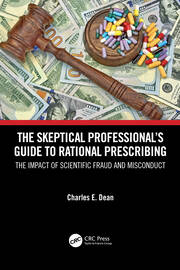
The Skeptical Professional’s Guide to Rational Prescribing The Impact of Scientific Fraud and Misconduct
Table of Contents
Introduction: Historical Roots and Recurrence
Chapter 1: Regulations, the Growth of Pharma, and Diagnostic Expansion, 1951-2003: A Wealth Trifecta
Chapter 2: Industry Payments to Physicians: Research and Education or Bribery?
Chapter 3: Direct-to-Consumer Advertising: Origins, Extent, and Consequences
Chapter 4: Publication and Citation Bias, Spin, and Sponsorship: Tilting the Risk-Benefit Ratio
Chapter 5: Fraudulent Authorship: Guests, Ghosts, and Honorary Authors
Chapter 6: Meta-Analyses and Systematic Reviews: Biases and Short-Cuts to Knowledge
Chapter 7: Replication and Reproducibility of Research Results: A Crisis?
Chapter 8: Distorted Outcomes and Retractions: Prevalence and Types
Chapter 9: Journalology, Predatory Journals, Peer Review, Pre-Prints, and Guidelines
Chapter 10: Can Misconduct and Fraud be Fixed?
Chapter 11: An Entrepreneurial Health Care System: Risks and Benefits to Rational Prescribing
Biography
Dr Dean has his residency training in psychiatry at the University of Cincinnati. He then volunteered for the service in the US Army Medical Corp and was stationed at the 2nd General Hospital in Landstuhl West Germany from 1965-1968, followed by 13 years at the Hennepin County Medical Center in Minneapolis, Minnesota. He had a short stint in private practice, then joined the Minneapolis VA Medical Center in 1987. In 2012 he retired from clinical practice but has remained a voting member of the Institutional Review Board and the Pharmacy and Formulary Committee. He has won 7 Teacher of the Year awards from the Department of Psychiatry at the University of Minnesota Department of Psychiatry, where he developed and taught courses in clinical neuroscience and psychopharmacology. His primary research interests have been in tardive dyskinesia, diagnoses, psychotropic medications, and the history of psychiatry.
