





1st Edition
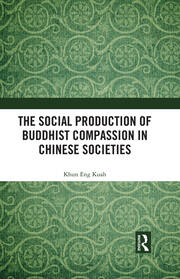
The Social Production of Buddhist Compassion in Chinese Societies
Preface
1 Introduction
2 A Theoretical Framework for the Social Production of Religious Compassionate Fields
3 Technology of the Self and Compassionate Buddhist Giving
4 The Buddhist Care Industry of the Local Compassionate Fields
5 Hometown as Transnational Buddhist Philanthropic Field: The Hope School Project
6 Women Buddhists and Emotive Compassionate Performance
7 Emotional Spiritual Capital and the Production of Religious Care Funds
8 The State and Buddhist Elderly Care Services
9 Conclusion: Towards Sustainable Buddhist Compassionate Fields
Bibliography
Glossary
Biography
Khun Eng Kuah is Distinguished Professor of Anthropology and Chinese Diaspora Studies at the School of International Studies and the Academy of Overseas Chinese Studies, Jinan University (Guangzhou, China); and Honorary Professor at the Department of Sociology, The University of Hong Kong.
"This volume treats the social production of religious —here specifically Buddhist—“compassionate fields” in the twenty-first century, drawing on three case studies: Hong Kong, Singapore, and Taiwan. It is divided into nine chapters, each one centering on a particular aspect related to the Buddhist compassionate fields, which operate to cope with social inequality, social injustice, and social suffering of certain marginalized segments of the population, such as the case of elderly people, children, people with special needs or disabilities."
- Marzia Alteno, University of Vienna
