





408 Pages
by
Routledge
408 Pages
by
Routledge
408 Pages
by
Routledge
Also available as eBook on:
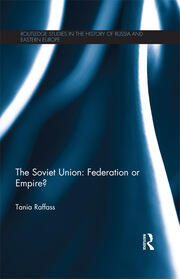
The Soviet Union is often characterised as nominally a federation, but really an empire, liable to break up when individual federal units, which were allegedly really subordinate colonial units, sought independence. This book questions this interpretation, revisiting the theory of federation, and discussing actual examples of federations such as the United States, arguing that many federal... Read more
Part 1: 1. The Original Federation 2. Daniel J. Elazar’s Covenantal Interpretation of American Federalism 3. The Roots of the Soviet Federation Part 2: 4. The American Federation and Secession 5. Conflicting Perspectives on the Dissolubility of the American Union 6. Secession as a Constitutional Right in the USSR Part 3: 7. A Constitutional Comparison between the Soviet and Emerging Western Models of Multinational Federalism 8. On the Integrative Effects of Federalism and Consociation Part 4: 9. The Soviet Union and Nation 10. The Soviet State as Viewed by Nationalists Part 5: 11. Imperial Contiguity and Russia’s ‘Stunted Nationhood’ 12. Was the Soviet Union the ‘Last Empire’?
Biography
Tania Raffass is a postgraduate researcher at the School of Political Social Inquiry, Monash University
Overall this is a thorough book by Tania Raffass, showing a good knowledge of Russian and American political history, and one that presents a compelling argument for avoiding the tag of ‘empire’ in classifying the Soviet Union, that it was simply one variation of what we class as federalism, and that liberalism should not be conflated with federalism.
- Gerard Clare, University of Glasgow
