




1st Edition
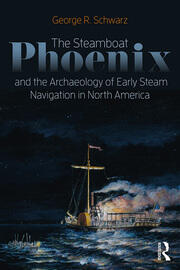
The Steamboat Phoenix and the Archaeology of Early Steam Navigation in North America
Introduction
Chapter 2: From "Bull Boats" to Steamboats: Travel on Early American Waterways
Chapter 3: Genesis of North American Steam Navigation
Chapter 4: Phoenix
Chapter 5: A Study of American Steamboat Heritage
Chapter 6: Construction Features of an Early American Steamer
Chapter 7: From the Ashes (a Reconstruction)
Chapter 8: Phoenix and the Design Characteristics of early 19th-Century Paddlewheelers
Chapter 9: Steamboat Living on American Waterways in the First Quarter of the 19th Century
Chapter 10: Conclusion
Appendix: Phoenix Artifact Catalog.
Biography
George R. Schwarz is an underwater archaeologist for the Naval History and Heritage Command, and part of a team that manages, preserves, and studies U.S. Navy’s sunken military craft. In addition to naval and steamboat wrecks, he is involved in research on post-medieval Iberian vessels. He holds a PhD in Anthropology from Texas A&M University’s Nautical Archaeology Program.
"The work is well referenced, using standard in text referencing format, and then citing the references used at the end of each chapter, to me a useful and more immediate touch for the researcher. Finally, though I did not like them at all, the cartoon-like images at Figures 4.6 and 4.8 purporting to present the contemporary scene as Phoenix is consumed by fire, and 4.9, the ‘Witch of [Lake] Champlain’ actually succeed if one keeps the other half of Schwarz’s audience (the general reader, seeking a good, easily-read and lively maritime story) in mind. For them Schwarz’s Phoenix can be a great introduction to the region’s maritime history and to maritime archaeology and its many facets, again widening its appeal. Schools in the region might also find it a useful work for the same reason."
- Mcarthy, Journal of Maritime Archeology
