




1st Edition
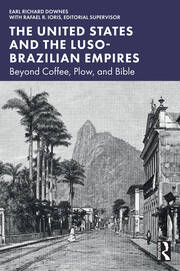
The United States and the Luso-Brazilian Empires Beyond Coffee, Plow, and Bible
Introduction
1. The Prelude: The Luso-Brazilian Agricultural Renaissance and the United States, 1770–1808
2. The Court Transfers to Brazil
3. Henry Hill, the Would-be Fazendeiro
4. Defining Imperial Brazil’s Economic Priorities
5. The Commission Merchant Extends the Coffee Trade
6. Exploring Brazil’s Natural Riches for Science, Profit, and Colonization
7. Opening the Doors for Reform, 1850–1860
8. The Introduction of U.S. Immigrants, Cultivars, and Equipment
9. The Arrival of U.S. Engineers and Science Technicians
10. The Coffee Trade Generates Financial Benefits
11. The U.S. Missionaries and Brazil’s Religious Institution
12. The United States and the Empire’s Educational Institutions
Conclusion
Biography
Earl Richard Downes (1947–2024) was an Independent Researcher whose previous affiliations included Associate Dean at William J. Perry Center for Hemispheric Defense Studies, National Defense University; Senior Research Associate, North-South Center, University of Miami; Adjunct Professor of International Relations, Florida International University; and Associate Professor of History, USAF Academy.
Rafael R. Ioris is Professor of Latin American History at the University of Denver. He has published books, articles and book chapters on various dimensions of Brazil’s economic, political, intellectual, and diplomatic histories, and on the role played by US actors in the course of Brazil’s and Latin America’s development.
