
1st Edition

The User Perspective on Twenty-First-Century Art Museums

By Georgia Lindsay Copyright 2016
310 Pages
by Routledge

310 Pages
by Routledge

310 Pages
by Routledge

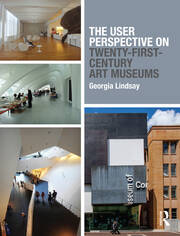
The User Perspective on Twenty-First Century Art Museums explains contemporary museums from the whole gamut of user experiences, whether users are preserving art, creating an exhibit, visiting, or part of institutions that use the architecture for branding. Fourteen museums from the United States, Europe, China, and Australia represent new construction, repurposed buildings, and additions,... Read more
Introduction  Part 1: Repurposing: Delight in Repurposed Places  Chapter 1. Monash University Museum of Art  Chapter 2. Long Museum West Bund  Part 2: Responding: Highlighting Differences  Chapter 3. Museum of Contemporary Art of Australia’s Mordant Wing  Chapter 4. North Carolina Museum of Art’s West Wing  Chapter 5. Milwaukee Art Museum’s Quadracci Pavilion  Chapter 6. Denver Art Museum’s Hamilton Building  Part 3: Building New, under 50,000 square feet: Focus and Flexibility  Chapter 7. Luyeyuan Stone Sculpture Museum  Chapter 8. Nanjing Sifang Art Museum  Chapter 9. Museum of Contemporary Art – Cleveland  Chapter 10. Tree Art Museum  Part 4: Building New, over 50,000 square feet: Invitation and Adventure  Chapter 11. FRAC Bretagne  Chapter 12. New Museum  Chapter 13. Museum aan de Stroom  Chapter 14. The National Museum of XXI Century Arts (MAXXI)  Conclusion: The User Perspective and Users in 21st Century Museums  A Brief Note on Methods  List of Museums  List of Architects  Image Credits

Biography

Georgia Lindsay is a Visiting Assistant Professor in the Environmental Design Program at the University of Colorado Boulder. She is co-editor of Revisiting "Social Factors": Advancing Research into People and Place. She received her PhD from the University of California, Berkeley.

"For Georgia Lindsay a "user" is not only a visitor or staff member but also someone who never actually enters the museum, the city hosting the museum, the ecological system it affects and even the art it houses. Her detailed narrative addressing various programming and design issues raised by 14 cases of 21st century museums inspires one to think and reflect, rather than to follow set guidelines or checklists. If only more building types were analyzed in such an inclusive, insightful and engaging manner!" - Karen A. Franck, Professor, New Jersey Institute of Technology and co-author of Memorials as Spaces of Engagement
