





1st Edition
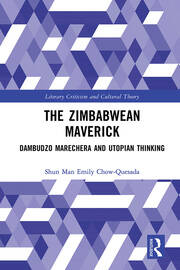
The Zimbabwean Maverick Dambudzo Marechera and Utopian Thinking
Contents
Acknowledgments
Introduction: Situating Marechera and Utopia
Chapter 1: Marechera, Heimat, and the Utopian Function of Literature
- Literature and Utopian Thinking
- The Role of the Writer
- Marechera’s Heimat
Chapter 2: The Utopia of an Outsider
- The Escape Mentality
- The "Outsider" and the "Nowhere"
- Ambiguity and Openness
Chapter 3: Violence and Power
- Power in Violence
- Women in Violence
- Violence and Aporia
Chapter 4: Narratives of Identities
- Racial Identity
- Ethnic Identity
- National Identity
- A Being of Rootlessness
Chapter 5: The (Un)Real
- Orientating Reality
- Melting the "Columns" of Society
- Embracing the "(Un)real"
Chapter 6: The Writer and the Community
- The Individual versus the Collective
- A Constellation of Individuals
- Responsibility and Emancipation
Conclusion: Marechera – the "Dissident"
Biography
Shun Man Emily Chow-Quesada is an Assistant Professor in the Department of English Language and Literature at Hong Kong Baptist University. Her research focuses on world and postcolonial Anglophone literature, and the representations of Africa in Hong Kong. She has published journal articles and book chapters on Anglophone African literature and taught courses in world literature, postcolonial literature, African literature, and representations of blackness. She is also the editor of the "Hong Kong and Chinese Literature and Culture" section of Hong Kong Review of Books.
Chow-Quesada offers a remarkable new reading of Marechera’s work, liberating it from the corset of overly used typologies and parameters of postcolonial theory. Seen through Marechera’s works and words, utopia is not the far-away imaginary world of our dreams. It rather takes form through the permanent and adamant resistance against all tenets of the world as we know it. Importantly in the context of recent discourses around identity politics, Chow-Quesada highlights how Marechera explodes all categorization along racial, ethnic or national identity.
-Flora Veit-Wild, Professor Emerita of African Literatures and Cultures, Humboldt University, Berlin.
