




1st Edition
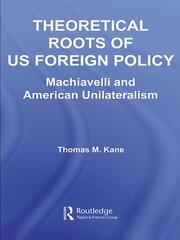
Theoretical Roots of US Foreign Policy Machiavelli and American Unilateralism
Biography
Thomas M. Kane
This proposal compares favorably to its competition for a variety of reasons. For starters, most of its competitors are limited in their scope to events after 1945 or since 11 September 2001. Those works that do provide historical context do so selectively (as in the case of Johnson’s The Sorrows of Empire) to advance their arguments. Dr. Kane’s work is unique in that it suggests that works of theory can inform events of today.
Dr James Kiras
Dr. Kane’s effort to, at length, discuss the relationship between the Bush Administration’s foreign policy and Machiavelli is unusual and, as a result, I think the book has a good "niche."
Dr C. Dale Walton
On the whole, Dr. Kane’s work is an important corrective to the existing arguments about American unilateralism that center on President Bush’s personal interests and beliefs, or the "hijacking" of American national security policy by Vice President Cheney and his "cabal" of neoconservatives.
Dr Brian Auten
