




1st Edition
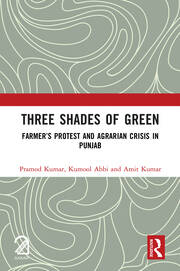
Three Shades of Green Farmer’s Protest and Agrarian Crisis in Punjab
Introduction
1. Politics of Agrarian Protests: Resistance to Corporatization of Agriculture in Punjab
Pramod Kumar
- Historical Context
- Land Reforms and Farmers’ Movements in Independent India
- Transformation of Farmers’ Movement: From Land to Pricing
- Stagnation in Agriculture
- Diversification of Crops: A Non-Starter
- Genesis of Agrarian Protests: Early and Late Green Revolution
- Shaping of Contemporary Protests
- Anti-Centre Anger at the Grass Roots
- Negotiations
- Turning Point: State Response from Indifference
- Communal Twist
2. The Status of the Status Quo: Locating Punjab in Contemporary Farmers' Protest
Amit Kumar
- New Farm Laws and Farmers’ Protest
- Dead Men Tell Long Tales: A Historical Aspect of Peasants Agitations in Punjab
- Role of the Farmers’ Unions and Other Organizations in the Peasant Struggle in Punjab
- Role of Songs Singers and Women in the Recent Farmers’ Protest
- Development Rush
- What Lies Ahead?
- The Verdict?
3. The Punjab Farmers' Agitation? Reaffirmation, Realignment and Renaissance
Kumool Abbi
- Mobilizing Fear of Corporatization Through Folk Songs
- Three Shades of Green
- Shaping of Protest in Phases: Capturing the Role of
- Folk Songs
- A Sense of Anti-Centrism
- Role of Women in the Protest
- Process, Protestors and Narratives
- Identity Assertion: Sikhs and Farmers
- Setback, Revival and Victory
Appendix
References
Bibliography
Index
Biography
Pramod Kumar is Director, Institute for Development and Communication (IDC), Chandigarh, India. He Chaired Commissions on Governance Reforms for the States of Punjab and Haryana, India. His latest book is The Idea of New India: Essays in Defence of Critical Thought.
Kumool Abbi is Professor at the Department of Sociology while he also serves as Director at the Population Research Centre, Punjab University, Chandigarh, India.
Amit Kumar is Research Officer, Institute for Development and Communication (IDC), Chandigarh, India.
