





158 Pages
by
Routledge
158 Pages
by
Routledge
158 Pages
by
Routledge
Also available as eBook on:
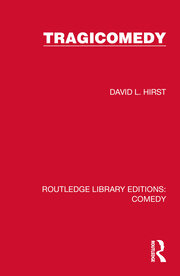
In this brief study, originally published in 1984, David Hirst examines the meaning of the term ‘tragicomedy’ by elucidating the most important theories of the genre and by analysing those plays which represent its most vital and influential expression. He draws a distinction between tragicomedies and conceived as a careful fusion of contrasted dramatic elements and as a mixed genre which seeks... Read more
Acknowledgements. Preface. Part I: The Sixteenth and Seventeenth Centuries: Neo-classical Romance and Satire 1. Introduction 2. Seventeenth-century Pastoral and Tragicomedy 3. Comedy in Tragedy: Elizabethan and Jacobean Theatre 4. French Seventeenth-century Tragicomedy Part II: The Nineteenth and Twentieth Centuries: Modern Romanticism and Realism 5. Melodrama 6. Variations of Melodrama: Chekhov and Shaw 7. Twentieth-century Pioneers 8. Old Ways, New Directions. Select Bibliography. Index.
Biography
David L. Hirst
