




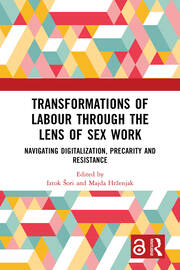
1st Edition
Transformations of Labour through the Lens of Sex Work Navigating Digitalization, Precarity and Resistance
Introduction: Charting Precarity, Agency, and Politics of Sex Work
Iztok Šori and Majda Hrženjak
PART I: The digital reconfiguration of sex work under neoliberalism
1. Webcamming: Where Digital Labour Meets Smooth Capital
Rachel Stuart
2. Platform Sex Work and Workplace Self-Help Literature: Discourses of Authenticity and Individualism
Gwyn Easterbrook-Smith
3. A Peek Behind the Veil of the Intermediary Status of Porn Platforms: The Atypical Nature of Porn Content Creators’ Employment in the UK
Rebecca Rose Nocella
4. Unveiling Stigma in the Digital Age: Exploring Attitudinal Differences in Perceptions of the Exchange of Sexual Services for Payment in the United States
Isabelle Johansson and Michael A. Hansen
PART II: Quality of work in the gig economy
5. Ambivalences of Precarity: Sex Workers’ Assessments of Quality of Work in Slovenia’s Sex Industry
Iztok Šori and Leja Markelj
6. Stigmatized (M)Others: Analysing the Navigation of Sex Work and Mothering in Canada Through an Antiwork Lens
Michelle Lesley Annett
PART III: The politics of resistance and infrastructures of solidarities
7. Sex Work, Post-Socialist Precarity and Civil Society: Shifting Frames of Recognition of Sex Work in Poland after 1989
Anna Ratecka
8. Playing with the Law: The Greek Sex Workers’ Movement’s Struggle for Recognition, State Feminisms, and Work under Neoliberalism
Athena Michalakea
9. Building Social Unionism: Sex Workers’ Struggles and Their Alliances in Spain
María Gómez Garrido and Paloma Martín
Biography
Iztok Šori (PhD in Sociology) is a researcher and director at the Peace Institute, Slovenia, an independent research and advocacy organization dedicated to human rights, democracy and social justice. His academic interests focus on the intersections of gender, migration, and labour. With extensive experience in both national and international research projects, he has recently led a project on occupational risks in sex work. In addition to his research activities, Šori works closely with advisory bodies on science and gender equality. His most recent publication (2024) examines the affective framing of migration as a security threat by right-wing populist movements.
Majda Hrženjak (PhD in Sociology) is a senior researcher at the Peace Institute, Slovenia. Her work explores care work, gender, and labour market inequalities through an interdisciplinary lens that bridges sociology and gender studies. She has coordinated and contributed to numerous national and international research projects and serves on editorial and scientific boards, including Men and Masculinities. Her scholarship is published in leading international journals and edited collections, with a focus on the social organization of care, labour mobility, and intersectional inequalities. Her most recent work (2025) examines the governance of labour migration in senior care homes.
