




1st Edition
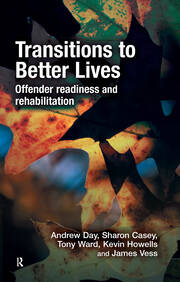
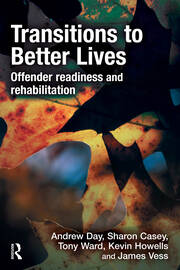
Transitions to Better Lives Offender Readiness and Rehabilitation
336 Pages
by
Willan
336 Pages
by
Willan
336 Pages
by
Willan
Also available as eBook on:
Transitions to Better Lives aims to describe, collate, and summarize a body of recent research – both theoretical and empirical – that explores the issue of treatment readiness in offender programming. It is divided into three sections:
part one unpacks a model of treatment readiness, and explains how it has been operationalized
part two discusses how the construct has been applied... Read more
Part I: What is Treatment Readiness? 1. The Multifactor Offender Readiness Model 2 . The Origins of Treatment Readiness 3. What are Readiness Factors? 4. The Good Lives Model of Offender Rehabilitation and Treatment Readiness 5. The Assessment of Treatment Readiness Part II: Readiness and Offenders 6. Interpersonal Violence: the Need for Individualised Services 7. Sex Offenders: Understanding Low Readiness 8. Substance Use and Readiness 9. Readiness and Treatment Engagement in Personality Disordered Offenders: Towards a Clinical Strategy Part III: Clinical and Therapeutic Approaches to Working with Low Levels of Readiness 10. The Modification of Low Readiness 11. Goal-focused Interventions with Offenders 12. Treatment Readiness and the Therapeutic Alliance 13. Readiness and Risk: a Case Illustration 14. Ways Forward and Conclusions Appendix 1: Measures of Treatment Readiness
Biography
Andrew Day is Associate Professor of Psychology at Deakin University, Australia.
Sharon Casey is a Lecturer at the School of Psychology, Social Work and Social Policy, at the University of South Australia.
Tony Ward is Head of the School of Psychology at Victoria University of Wellington, New Zealand.
Kevin Howells is Professor of Clinical and Forensic Psychology at the University of Nottingham.
James Vess is Senior Lecturer in Psychology at Deakin University, Australia.
'The book provides an encouraging insight into the advancements being made in providing ethical and effective interventions to reduce reoffending, within a therapeutic milieu of legitimate and respectful relationships, and led by the individual's own efforts to stop offending and achieve their goals.' - Ros Burnett, Reader in Criminology, University of Cambridge in The Howard Journal of Criminal Justice, May 2011
