





1st Edition
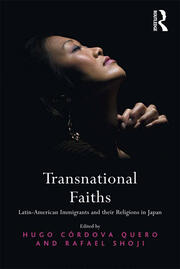
Transnational Faiths Latin-American Immigrants and their Religions in Japan
Biography
Dr Hugo Córdova Quero holds a Ph.D. from the Department of Interdisciplinary Studies at the Graduate Theological Union at Berkeley, with allied field at the Department of Ethnic Studies, University of California at Berkeley. He received a Master in Divinity from ISEDET University in Buenos Aires (1998) and a Master of Arts in Systematic Theology and (Post)Colonial studies from the Graduate Theological Union at Berkeley (2003). He was Professor of Ecumenism at the Santa Maria de Guadalupe Roman Catholic Seminary in Buenos Aires (1998-2001) and visiting scholar at the Chinese University of Hong Kong (2006). He was visiting researcher at the Center for Lusophone Studies, Sophia University (Jesuit), in Tokyo, Japan (2006-2009). His areas of research include theology, ethnic studies, gender studies, critical theories (feminist, queer, and post-colonial), and cultural studies. Dr Rafael Shoji holds a Ph.D. from the Leibniz University of Hanover (Germany) and developed postdoctoral research in the Pontifical University of Sao Paulo and at Nanzan University. He is a co-founder and researcher of the Center for the Study of Oriental Religions (CERAL) at the Pontifical University of Sao Paulo. He has published on Japanese religions in Brazil, Japanese Brazilian culture and comparative studies on Buddhism and Christianity. As a Japanese Studies fellow of the Japan Foundation at the Nanzan Institute for Religion and Culture (Nagoya, Japan) he was recently engaged in research on the religions among Brazilians in Japan, especially the reinterpretation of Christianity.
"..this edited volume provides a very important contribution to the study of religion in East Asia and is highly recommended to scholars in this field as well as to all those interested in transnational religion and in the broader issue of cultural hybridity."- Ugo Dessì, Cardiff University
