





1st Edition
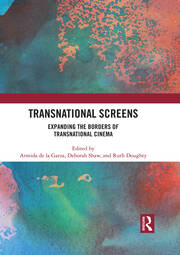
Transnational Screens Expanding the Borders of Transnational Cinema
Introduction: From transnational cinemas to transnational screens, Armida De La Garza, Ruth Doughty & Deborah Shaw
Chapter 1: Concepts of transnational cinema revisited, Song Hwee Lim
Chapter 2: Transnational turn or turn to world cinema? David Martin-Jones
Chapter 3: Performing cosmopolitanism: Julie Delpy and Ethan Hawke in Richard Linklater’s ‘before’ trilogy, Celestino Deleyto
Chapter 4: ‘The past is a foreign country’: exoticism and nostalgia in contemporary transnational cinema, Daniela Berghahn
Chapter 5: The ontological transnationalism of the filmmaker: solidarity-based talent development across borders, Mette Hjort
Chapter 6: Moroccan diasporic cinema: the ‘rooted transnationalism’ of the cinéastes de passage, Will Higbee
Chapter 7: Close encounters with foreignness, Bruce Bennett & Katarzyna Marciniak
Chapter 8: Eco-critique as transnational commons, Sean Cubitt
Chapter 9: Second phase transnationalism: reflections on launching the SCMS transnational cinemas scholarly interest group, Austin Fisher & Iain Robert Smith
Biography
Dr Armida de la Garza is Senior Lecturer in Digital Arts and Humanities at University College Cork, Ireland. She is interested in research on internationalisation in higher education; on Screen Media and their relation to culture, industry and education; and on collaborative, interdisciplinary research that bridges the gap between science and the arts.
Deborah Shaw is Professor of Film and Screen Studies at the University of Portsmouth. Her research interests include transnational film theory, Latin American cinema, and film and migration, and she has published widely in these areas.
Dr Ruth Doughty is the Programme Leader for Film Studies at Liverpool John Moores University. She is the co-author of Understanding Film Theory (2017). Ruth is the Principal Investigator on a Lottery Funded project looking at the history of Littlewoods in Liverpool.
Armida, Deborah, and Ruth are the co-founding editors of Transnational Cinemas, now Transnational Screens.
