




1st Edition
Transoceanic Animals as Spectacle in Early Modern Spain
By John Beusterien
Copyright 2020
254 Pages
by
Routledge
254 Pages
by
Routledge
254 Pages
by
Routledge
Also available as eBook on:
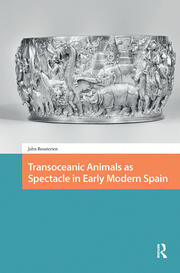
Animal spectacles are vital to a holistic appreciation of Spanish culture. In Transoceanic Animals as Spectacle in Early Modern Spain , Beusterien christens five previously unnamed animals, each of which was a protagonist in a spectacle: Abada, the rhinoceros; Hawa’i, the elephant; Fuleco, the armadillo; Jarama, the bull; and Maghreb, the lion. In presenting and analyzing their stories,... Read more
Prologue, Introduction: Armored Beasts and the Elephant in the Room, Chapter 1: Abada the Rhinoceros and Hawa'i the Elephant, Chapter 2: Fuleco the Armadillo, Chapter 3: Jarama the Bull and Maghreb the Lion, Conclusion: Biogeography as a Teaching Tool, Appendix 1: Biogeography Course Project: Naming an Early Modern Animal, Appendix 2: Bibliography for the Study of Animals and Early Modern Spain, Index.
Biography
John Beusterien is Professor of Spanish and Coordinator of the Comparative Literature Program at Texas Tech University.
Transoceanic Animals recounts the stories of five itinerant animals who lived and died in early modern Spain. From a Brasilian armadillo whose carapace graced a cabinet of curiosities in Seville to an Indian rhinoceros who bathed in the Tagus, it reveals the multiple meanings assigned to exotic beasts and examines their shifting roles as specimen, spectacle, symbol and muse. Engaging, illuminating and sometimes harrowing, Beusterien's book makes an important contribution to human-animal history. - Helen Cowie, University of York, author of Llama
