




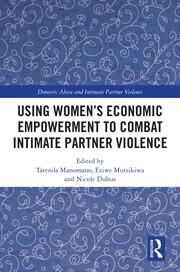
1st Edition
Using Women's Economic Empowerment to Combat Intimate Partner Violence
Chapter One – Addressing Intimate Partner Violence Globally: Women’s Economic Empowerment as a Comprehensive Tool for Prevention and Response
Eziwe Mutsikiwa, Tatenda Manomano and Nicole Dubus
Section I – Foundational Concepts and Contributing Factors to IPV
Chapter Two – Understanding Intimate Partner Violence: Fundamental Causes and Systemic Barriers to Support Services
Eziwe Mutsikiwa
Chapter Three – Distinctive characteristics of Intimate Partner Violence and the power dynamics that underpin abusive relationships
Rumbidzai Nyanhoto
Chapter Four – The Public Display and Normalisation of Intimate Partner Violence in South Africa
Nathane Motlalepule, Chauke Khanyisa and Mkwananzi Sibusiso
Chapter Five – Transformative Education and Awareness
Eleanor Hendricks
Section II – Exploring Solutions and Empowerment Models
Chapter Six – Dimensions of Empowerment: Economic, Social-Cultural, Legal, Psychological, and Political Perspectives
Eziwe Mutsikiwa
Chapter Seven – The Role of Empowerment in Addressing Intimate Partner Violence
Mabebe Mary Kgole
Chapter Eight – Building Social Networks and Support systems
Tatenda Manomano
Chapter Nine – Emotional Intelligence in Preventing the Recurrence of Intimate Partner Violence
Rumbidzayi Nyanhoto
Chapter Ten – Economic empowerment tools to support female victims of intimate partner violence: Suggestions for social work support
Petro Botha and Linda Shirindi
Chapter Eleven – Interagency Collaboration as a Catalyst for Victim Empowerment in South Africa
Mary Kgole
Chapter Twelve – Engaging South Sudanese Men and Boys in Breaking the Cycle of Intimate Partner Violence
Henry Ndala
Chapter Thirteen – The role of Men (and boys) in breaking the cycle of intimate partner violence in South Africa
Luvuyo Teko and Ntandoyenkosi Maphosa
Chapter Fourteen – Youth, Gender, and Intimate Partner Violence: Lessons from an Australian Community-Based Intervention
Siobhan Hardiman
Section III - Critiques, Gaps, and Future Directions
Chapter Fifteen – The Role of an Ubuntu Model as a Holistic Approach to Challenging Power Imbalances
Tatenda Manomano
Chapter Sixteen – Using the victim-survivor approach to empower victim-survivors of IPV in South Africa
Luvuyo Teko, Xola Lucas Fayo and Somila Nojilana
Chapter Seventeen – The Dark Side of Microfinance: Predatory Lending, Violence Against Women, and Modern Slavery
Sarah Rogers
Chapter Eighteen – Strengthening the Homefront: Examining the Potential of Economic Empowerment in Responding to Domestic and Family Violence in Military Families
Amanda Tarrant, Amanda McCue, Andrew Prevett, Ben Wadham and Catherine Mackenzie
Chapter Nineteen – Recovering and Rebuilding the Lives of Women with Disabilities who are Survivors of Intimate Partner Violence
Mavis Mushonga
Chapter Twenty – Holistic Healing, Intimate Partner Violence, and Women’s Economic Empowerment
Noritta Moreseu-Diop
Chapter Twenty-one – Navigating the Legal Landscape: Federal and State Policy Responses to Domestic and Intimate Partner Violence in the United States
Nicole Dubus
Chapter Twenty-two No One Left Behind? Intimate Partner Violence and Australia's Policy Responses and Progress Towards the Sustainable Development Goals
David Mhlanga and Tatenda Manomano –
Chapter Twenty-three – Towards the social inclusion and empowerment of women from refugee and migrant backgrounds in non-metropolitan Australian communities
Mandy Hughes, Louise Whitaker and Barbara Rugendyke
Chapter Twenty-four – Empowerment as a Tool for Economic Equity
Eziwe Mutsikiwa
Chapter Twenty-five – Roadmap for Future Action
Eziwe Mutsikiwa and Tatenda Manomano
Chapter Twenty-six – Conclusion
Eziwe Mutsikiwa and Nicole Dubus
Biography
Tatenda Manomano is the discipline lead in Social Work and a senior lecturer in the Australian College of Applied Professions University College, as well as a research fellow at the University of the Free State.
Eziwe Mutsikiwa is a research, monitoring and evaluation and gender expert consultant in Zimbabwe with significant research experience in issues that involve women and intimate partner violence and children.
Nicole Dubus is a Professor of Social Work at San Jose University in the United States of America.
