





1st Edition
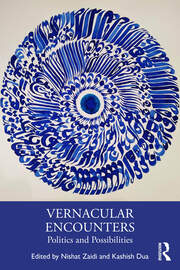
Vernacular Encounters Politics and Possibilities
Introduction - The Vernacular as Method: Encounters, Politics, and Possibilities of Decolonial Futures
Nishat Zaidi and Kashish Dua
Part I: Language and Identity in Vernacular Contexts
1. The Ghostly Vernacular: Language in Indo-Fijian Poetry
Tana Trivedi
2. Language Ideologies of a Goan Desk Calendar
Layla Mascarenhas and Frederick Noronha
3. Becoming Assamese: Language, Identity and Anxiety
Nandini Kalita
Part II: Vernacular Literatures and Community Narratives
4. Interrogating Colonial Historiography: Traditions of 'Vernacular' and the Case of Sikh Community Periodicals (1890-1910)
Guntasha K. Tulsi
5. Rendering Visibility to the Public: Examining Satire and Critique in the Vernacular through the Newspaper Navashakti
Easwar Anand Thampi
6. ‘Qaum’ and its Complex Genealogies: Perspectives from Urdu Digests in Post-Partition India
Anab Naiyer
Part III: Evolution and Contention of Language Cultures
7. Indigenous Voices: An Exploration of Native Translators and Preachers in the Khasi and Jaintia Hills
Mereleen Lily Lyngdoh Y. Blah
8. The Colonial and the Vernacular: Three Moments of Encounter
Syed Aalim Akhtar
9. Towards a Republic of Vernacular (World) Letters: On How to Planetarize “World Literature”
Arindam Saha
10. Internet and its Vernacular Encounters: Contested Terrain of Digital Folk Video Culture(s) in India
Meenakshi Yadav
Biography
Nishat Zaidi is Professor of English and former chair at the Department of English, Jamia Millia Islamia. She is currently the Honorary Director of Sarojini Naidu Centre for Women’s Studies, Jamia Millia Islamia.
Kashish Dua is an Assistant Professor of English at Jesus and Mary College, University of Delhi. She was a Fulbright-Nehru Doctoral Fellow at the University of California, Berkeley and earned her PhD from the Department of English, Jamia Millia Islamia.
