




1st Edition
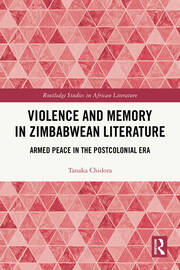
Violence and Memory in Zimbabwean Literature Armed Peace in the Postcolonial Era
1. Violent (Re)Births, Armed Peace and the Politics of Memory in Zimababwe
2. Destabilising the War Metanarrative in Shimmer Chinodya’s Harvest Of Thorns and Alexander Kanengoni’s Echoing Silences
3. Narrating Gukurahundi Trauma: A Violent Independence in the House of Stone
4. A Decade of Crisis, a Decade of Violence: The children of Harare North and We Need New Names
5. The Forgotten Doubles of NoViolet Bulawayo’s Glory
6. Re-Memorying Nehanda in Chenjerai Hove’s Bones and Panashe Chigumadzi’s These Bones Will Rise Again
7. Conclusion: The Future of the Past in Zimbabwean Politics and Literature
Biography
Tanaka Chidora is a Humboldt Fellow (2021–2023), a lecturer in the Department of Literary Studies at the University of Malawi and a research fellow in the Deparment of English, University of the Free State, South Africa. He is the Co-Chief Editor of Matatu: Journal for African Literary and Cultural Studies. Chidora is the author of Because Sadness is Beautiful? (2019), a collection of poems published to critical acclaim in Zimbabwe. The manuscript of his forthcoming novel, Born Location, was longlisted for the Island Prize as Carrying a Country on Your Forehead in 2023.
“Memory Studies meet African Literature: Tanaka Chidora’s literary history of ‘armed peace’ in post-independence Zimbabwe is a courageous piece of scholarship and a striking feat of the critical imagination. Delving deeply into the long histories of violence that have characterised Zimbabwe’s colonial past and post-colonial present, Chidora unravels the myths of a ‘patriotic history’ reduced to the single story of ZANU—PF’s military exploits and its authoritarian leaders as ‘fathers of the nation’ and deciphers the workings of a carefully orchestrated amnesia aiming to obliterate the life of ordinary Zimbabweans beyond armed conflict, the manifold forms and organisations of resistance against settler colonialism, the resistance of Zimbabweans against Mugabeist and post-Mugabeist autocracy, and the acts of terror by this autocracy against its own people. It is this strange mnemonic terrain constituted by both too much and too little memory that Chidora explores in his astute in-depth readings of contemporary Zimbabwean writers and their manifold literary strategies of ‘de-silencing the past.’”
Frank Schulze-Engler, retired professor, Goethe University Frankfurt, Germany.
