





1st Edition
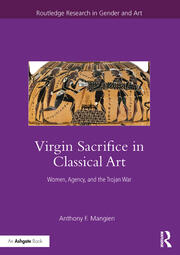
Virgin Sacrifice in Classical Art Women, Agency, and the Trojan War
Table of Contents
Acknowledgements
List of Figures
List of Abbreviations
Chapter 1: Introduction: Virgin Sacrifice in Classical Art and Society
Just a Man’s World? The Patriarchal, Monolithic Male Gaze
The Public and Private ‘Lives’ of Iphigeneia and Polyxena
Organization of the Study
Chapter 2: What Makes a Virgin Sacrifice?
Towards a Definition of Virgin Sacrifice
Killing a Woman: Terminology and Relation to Animal Sacrifice
Traditions of Human Sacrifice in the Near East
Jephthah’s Daughter: Virgin Sacrifice in the Bible
Chapter 3: The Sacrifice of Iphigeneia
Iphigeneia in Greek Art
Iphigeneia in Etruscan Art
Iphigeneia in Roman Art
Chapter 4: The Sacrifice of Polyxena
Polyxena in Greek Art
Polyxena in Etruscan Art
Polyxena in Roman Art
Chapter 5: War and Womanhood: Virgin Sacrifice and the Trojan War
The Sacrificial Virgins and Helen of Troy
The Brygos Painter’s Louvre Iliupersis Cup
Iconographic Ambiguity: Who is Represented?
Between Sisters: Kassandra and Polyxena
The Sacrificial Virgin in Iliupersis Tableaux
Polyxena and Troilos
The Heroines Pyxis in London: The Art of Pairing Women
The Trojan War on Italian Soil: Resonances in the Roman World
Virgin Bodies: Framing The Trojan War
Beyond the Trojan War: The Defiant Antigone
Mythological Women, Representation, and Womanhood
Chapter 6: The Sacrificial Virgins and Female Agency
Consent, Resistance, and the Measure of a Maiden
Agency and Context in Etruscan and Roman Art
Polyxena the Aristocrat: Agency, War, and Tripods
Victims and Rebels: Recovering Ancient Women’s Resistance
Chapter 7: Conclusion: The Princess and the Knife
The "Afterlives" of Iphigeneia and Polyxena: Their Legacy
After the Sacrifice and Further Questions
Conclusion
Bibliography
Catalogue of Representations of Iphigeneia and Polyxena in Greek, Etruscan, and
Roman Art
General Index
Biography
Anthony F. Mangieri is Associate Professor of Art History and Coordinator of the Women, Gender, and Sexuality Studies program at Salve Regina University in Newport, Rhode Island, USA. He holds a Ph.D. in Greek and Roman art from Emory University. Mangieri has lectured widely and published articles on Greek art.
