




1st Edition
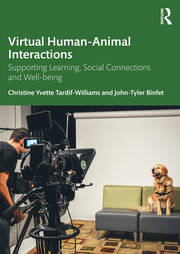
Virtual Human-Animal Interactions Supporting Learning, Social Connections and Well-being
Biography
Christine Yvette Tardif-Williams, PhD, is an associate professor in the Department of Child and Youth Studies at Brock University and has taught in the post-secondary context for 20 years. Dr. Tardif-Williams’ research adopts basic and applied approaches and is informed by the interdisciplinary fields of child and youth development and human-animal interactions. Dr. Tardif-Williams’ has two research streams that focus more broadly on how close bonds within interpersonal and animal relationships shape the social and emotional lives of children and youth. Specifically, Dr. Tardif-Williams’ research examines human-animal interactions, children’s relationships with animals, child maltreatment, parent-child attachment, and communication and conflict. Dr. Tardif-Williams’ research on children’s and dog handlers’ experiences with animals and therapy dogs in a variety of learning contexts has been published in Anthrozoӧs, Society and Animals, the Human-Animal Interaction Bulletin, Pet Behavior Science, and Psychology of Language and Communication.
John-Tyler Binfet, PhD, is an associate professor in the Faculty of Education at the University of British Columbia, Okanagan campus. His research explores prosocial behavior in children and adolescents and the effects of canine-assisted interventions on college student well-being. Dr. Binfet is the author of two previous books including the recently published Cultivating Kindness: An Educator’s Guide (2022) and a co-author of Canine-Assisted Interventions: A Comprehensive Guide to Credentialing Therapy Dog Teams (Binfet & Hartwig, 2020). His research on the effects of canine-assisted interventions has been published in Anthrozoӧs, the Journal of Mental Health, and the Journal of Veterinary Behavior among others. Dr. Binfet is the founder and director of UBC’s Building Academic Retention through K9s (B.A.R.K.) program that was established in 2012 and routinely sees 60+ therapy dogs and their handlers participate in on-campus and community programming.
