




1st Edition
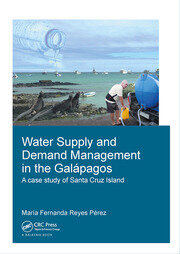
Water Supply and Demand Management in the Galápagos A Case Study of Santa Cruz Island
1. General Introduction
1.1 Water resources on small islands
1.2 Tourism influence on small islands
1.3 Water supply and demand issues on small islands
1.4 Water (demand) management on islands
1.5 General perspective of Santa Cruz Island
1.6 Motivation of the study
1.7 Outline of the thesis
2. Case Study Description
2.1 General information on the Galápagos Islands
2.2 The origin of the sources of water
2.3 The island of Santa Cruz
2.4 Research objectives and scope
3. Data Assessment for Water Demand and Supply Balance on Santa Cruz
3.1 Introduction
3.2 Research methodology
3.3 Main stakeholders involved in water resources management of Santa Cruz
3.4 Main suppliers of water at the island of Santa Cruz
3.5 Water supply systems in Puerto Ayora and Bellavista
3.6 Water-tariff structures in Santa Cruz Island
3.7 Assessment of water consumption for various categories in Santa Cruz
3.8 Management problems in the municipal department of potable water and sanitation
3.9 Institutional issues in Santa Cruz
3.10 Water supply input as component of water balance for Santa Cruz
3.11 Water demand calculation in Bellavista
3.12 Conclusions and Recommendations
4. Quantification of urban water demand
4.1 Introduction
4.2 Research methodology
4.3 Results of the survey
4.4 Analyses of results in Puerto Ayora and Bellavista
4.5 Average costs of water supply in Santa Cruz
4.6 Analysis on willingness to pay, payment of bottled water and increase of fixed tariffs
4.7 Conclusions and Recommendations
5. Assessment of domestic consumption in puerto ayora intermittent supply network
5.1 Introduction
5.2 Research methodology
5.3 Results and discussion
5.3 Analysis on scarcity of water in Puerto Ayora
5.4 Conclusions
6. Mitigation Options for Future Water Scarcity Using WaterMet2 Model
6.1 Introduction
6.2 Water demand forecasting
6.3 Urban water systems modelling
6.4 WaterMet2 model
6.5 Research methodology
6.6 Population and tourist growth scenarios for Puerto Ayora
6.7 WaterMet2 model building
6.8 WaterMet2 model calibration
6.9 Alternatives and intervention strategies
6.10 Results and discussion
6.11 Conclusions
7. Multi-criteria Decision Analysis of Water Demand Management Options for Puerto Ayora
7.1 Introduction
7.2 Multi-criteria decision analysis
7.3 Research methodology
7.4 Results of the MCDA sessions and discussion
7.5 Summary and conclusions
8. Hydraulic modelling of demand growth in Puerto Ayora water distribution network
8.1 Introduction
8.2 Demand-Driven Analysis (DDA) and Pressure-Driven Analysis (PDA)
8.3 Research methodology
8.4 Simulations, results and discussion
8.5 Conclusions
9. General conclusions and future outlook
9.1 Water supply and demand on the Island of Santa Cruz
9.2 Future water supply and demand management options
9.3 Key challenges and future recommendations
Biography
Maria Fernanda Reyes Pérez was born in Quito-Ecuador in March 1983. She graduated from Universidad San Francisco de Quito (USFQ), in Quito, Ecuador, in June 2007, with a Bachelor Degree in Environmental Engineering. After her studies, she worked in USFQ in the Masters of Ecology Department, as well as participating in several projects an consultancies in environmental remediation. In 2011 she obtained her master’s degree in Environmental and Energy Management from the University of Twente -The Netherlands, after which she taught a class in energy and Environment at USFQ, worked on several consultancy projects and worked at the Ministry of Public Health of Ecuador as environmental engineer.
While working at USFQ, she also contributed in several projects and researches in the Galápagos Islands. The main purpose of this research was to contribute with the environment, as well as with the local community. In 2012, Maria started her PhD at UNESCO-IHE in Delft, The Netherlands, and is currently a PhD candidate at the department of Environmental Engineering and Water Technology. Her research interest includes water demand management, water supply, water balance, multi-criteria decision analyses, water prognosis, environmental management and sustainability. She continues to work closely with the Galapagos Science Center, a research institute belonging to Universidad San Francisco de Quito and University of North Carolina at Chapel Hill, USA.
