




216 Pages
by
Routledge
216 Pages
by
Routledge
216 Pages
by
Routledge
Also available as eBook on:
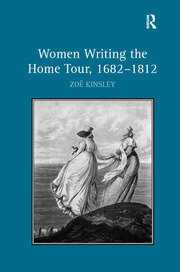
Between the late seventeenth and the early nineteenth century, the possibilities for travelling within Britain became increasingly various owing to improved transport systems and the popularization of numerous tourist spots. Women Writing the Home Tour, 1682-1812 examines women's participation in that burgeoning touristic tradition, considering the ways in which the changing face of British travel... Read more
Contents: Introduction: women on the home tour; Part 1 Travels and Texts: Considering the Travelogue Form: Pursuing order: the organizational strategies of women's travel texts; 'Coming before the public in the character of ... a tourist': travellers' textual choices. Part 2 Perspectives on the Landscape: Detachment and Destabilization in Home Tour Writing: Framing the landscape; Breaking the frame. Part 3 Travelling Identities: Travel Theory and the Emergence of British Tourism: Home tour spectacles; Encountering alterity; Epilogue; Bibliography; Index.
Biography
Zoë Kinsley is a senior lecturer in English literature at Liverpool Hope University. Her research and teaching interests include home tour travel writing, early modern scribal culture, and eighteenth-century landscape poetry. She has published various articles on these subjects and has recently co-edited the collection Mapping Liminalities: Thresholds in Cultural and Literary Texts (2007).
’Well grounded, Women Writing the Home Tour contributes to travel and tourism, women’s literary culture, and British national identity.’ The Scriblerian 'Kinsley makes a fine book out of an underwritten subject that is also overwritten elsewhere in criticism. Everyone will learn something from her: it offers fresh materials, intelligent orchestrations and an impressive connection of bigger pictures and fine details.' Women’s Writing '... a substantial contribution to current scholarly understandings of literary culture, aesthetic ideals, and the construction of feminine and British identities in the period.' Notes and Queries
