





166 Pages
by
Routledge
166 Pages
by
Routledge
166 Pages
by
Routledge
Also available as eBook on:
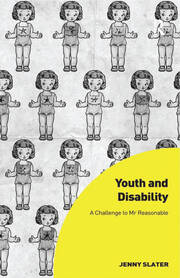
In this ground-breaking book, Jenny Slater uses the lens of ’the reasonable’ to explore how normative understandings of youth, dis/ability and the intersecting identities of gender and sexuality impact upon the lives of young dis/abled people. Although youth and disability have separately been thought within socio-cultural frameworks, rarely have sociological studies of ’youth’ and ’disability’... Read more
Introduction Theoretical Perspectives; Chapter 1 Disabled People in (Neo)liberal Times (or, Disability as Unreasonable); Chapter 2 Youth as Border Zone, Disability and Disposability (or, Challenging Youth as Becoming-Reasonable Adult); Chapter 3 The Making of Un/Reasonable Bodies at the Border Zone of Youth; Chapter 4 From Adulthood Independence to Continuing Relational Autonomy; Chapter 5 Negotiating Space and Constituting ‘Problems’: Access at the Border Zone of Youth; Chapter 6 Dis/abled Youth, Bodies, Femininity and Sexuality:Having Difficult Conversations; Chapter 7 The Limits of ‘Sameness’: Goodbye Mr Reasonable;
Biography
Jenny Slater is Lecturer in Education and Disability Studies at Sheffield Hallam University, UK.
’With this book Slater announces herself as a rising star of critical disability studies. This impassioned, politicised and engaged text alerts us to the possibilities that emerge for reimagining the human at the intersections of dis/ability and youth. Written with verve, humour and accountability, Slater illustrates that critical scholarship can be both theoretical and biographical in equal measure. A wonderful book.’ Dan Goodley, University of Sheffield, UK ’Jenny Slater goes straight to the heart of the matter to interrogate the unreasonability" of reasonable" neo-liberal discourses that enact violence against disabled youth. Slater writes lucidly linking theory with first person accounts by disabled youth and with her own insightful reflections to foreground ableism masquerading as a reasonable" discourse at the intersections of race, class, gender identity, and sexuality.’ Nirmala Erevelles, The University of Alabama, USA
