




1st Edition
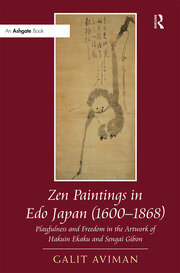
Zen Paintings in Edo Japan (1600-1868) Playfulness and Freedom in the Artwork of Hakuin Ekaku and Sengai Gibon
Biography
Galit Aviman received her PhD at Ben-Gurion University of the Negev, Israel in cooperation with Kyoto University, Japan. She conducted her post-doctoral studies at the Edwin O. Reischauer Institute of Japanese Studies, Harvard University, USA. She lived in Japan for ten years in total. Currently she is a lecturer at Ben-Gurion University of the Negev, The Hebrew University and Tel-Aviv University.
"The author applies a multifaceted approach, combining a holistic analysis of the paintings, i.e. an interrelated combination of text and image-with a contextualization of the works within the specific historical, art historical, cultural, social and political environments in which they were created." – The Asian Art Newspaper
