




1st Edition
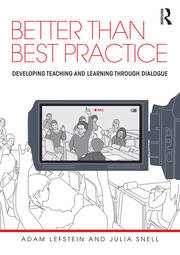
Better than Best Practice Developing teaching and learning through dialogue
List of tables and figures Acknowledgments Transcription conventions Section A – Where We’re Coming From 1. Better than Best Practice 2. Towards Dialogic Pedagogy 3. Setting the Scene: Working Towards Dialogue in a London Primary School Section B – Classroom Episodes Introduction: Practical Suggestions for Engaging with the Episodes 4. Breakthrough to Dialogue? Episode 1. Getting in to Narnia Commentaries David Reedy, Thinking collectively, backed by evidence James Cresswell, Art of Education: Balancing Direction and Dialogue 5. Responding to a Pupil Challenge; Episode 2: ‘I don’t really like that, Miss’ Commentaries Robin Alexander, Triumphs and dilemmas of dialogue Gemma Moss, Writing in the talk Greg Thompson, A Challenge (?) in the Interest of Dialogue Laura Hughes, The impact of dialogic teaching techniques – a teacher’s perspective 6. Importing Popular Culture into the Classroom; Episode 3: ‘So we’re going to have X Factor’ Commentaries Roxy Harris, Writing: Hard Slog, or Engaging and Entertaining? Janet Maybin, ‘Loads of really good words’ Dennis Kwek, Weaving Popular Culture: Towards Knowledge Building Laura Hughes, What did I learn at school today? 7. The Teacher’s Role in Classroom Debates; Episodes 4-5 Debating Football Commentaries Jeff Barrett, Developing Speaking Skills in the Shadow of Written Examinations: A Headteacher's Perspective Lucy Henning, What Role Is There For Organised Debate In A Literacy Lesson? Jayne White, Constraints and opportunities 8. Dialogue, Ability and Pupil Identities; Episode 6: ‘What does fear mean?’ Commentaries Mel Cooke, "‘Tightening the knot?’: fear, poetry and testing" Pie Corbett, "What the discussion of ‘The Owl’ made me wonder" Jennifer A. Vadeboncoeur and Louai Rahal, "On Practice, On Purpose" Glenda Moss, "The Complexity of Dialogic Teaching under the Shadow of Standardized Testing" 9. Discussing Pupil Writing in Whole Class Discussion; Episode 7: ‘I think there’s more to it than that’ 10. Using Empathy to Understand Character; Episode 8: ‘Tell me what you think as Wilbur’ Section C – Where to Go from Here 11. Continuing the Conversation: Parting Thoughts on Dialogic Pedagogy 12. Do It Yourself: Developing Teaching through Group Discussion of Video Recordings of Practice Methodology Appendix: Pedagogically Oriented Linguistic Ethnographic Micro-analysis
Biography
Adam Lefstein is Senior Lecturer in the Department of Education, Ben-Gurion University of the Negev, Israel.
Julia Snell is Lecturer in the Department of Education and Professional Studies, King's College London, UK.
