




1st Edition
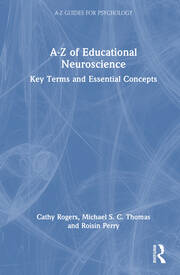
A-Z of Educational Neuroscience Key Terms and Essential Concepts
Introduction
Chapter 1. Abstraction
Chapter 2. Adhd
Chapter 3. Adolescence
Chapter 4. Ai Revolution
Chapter 5. Amygdala
Chapter 6. Analogies
Chapter 7. Anxiety
Chapter 8. Attention
Chapter 9. Autism Sd
Chapter 10. Automaticity
Chapter 11. Behaviour
Chapter 12. Belonging
Chapter 13. Bilingualism
Chapter 14. Brain Scan To Lesson Plan
Chapter 15. Bridge Too Far
Chapter 16. Circadian Rhythms
Chapter 17. Classroom Environment
Chapter 18. Class Size
Chapter 19. Climate Crisis
Chapter 20. Cognitive Load Theory
Chapter 21. Collaborative Learning
Chapter 22. Counterintuitive Concepts
Chapter 23. Creativity
Chapter 24. Culture
Chapter 25. Curiosity
Chapter 26. Developmental Change
Chapter 27. Developmental Language Disorder
Chapter 28. Dyscalculia
Chapter 29. Dyslexia
Chapter 30. Dyspraxia
Chapter 31. Early Career Framework
Chapter 32. Early Years
Chapter 33. Ecological Systems
Chapter 34. Embodiment
Chapter 35. Emotions
Chapter 36. Errors
Chapter 37. Ethics
Chapter 38. Executive Functions
Chapter 39. Evolution
Chapter 40. Feedback
Chapter 41. Forgetting
Chapter 42. Fun
Chapter 43. Gaps (Attainment)
Chapter 44. Genetics
Chapter 45. Gender
Chapter 46. Giftedness
Chapter 47. Grouping (Ability)
Chapter 48. Growth Mindset
Chapter 49. Health
Chapter 50. Hemispheres
Chapter 51. Hippocampus
Chapter 52. Holidays
Chapter 53. Homework
Chapter 54. Hormones
Chapter 55. Intelligence
Chapter 56. Jellyfish
Chapter 57. Knowledge
Chapter 58. Learning
Chapter 59. Lifelong Learning
Chapter 60. Literacy
Chapter 61. Mental Effort
Chapter 62. Mental Health
Chapter 63. Metacognition
Chapter 64. Methods To Know What Works
Chapter 65. Motivation
Chapter 66. Multimodality
Chapter 67. Multiple Intelligences
Chapter 68. Nature/Nurture
Chapter 69. Neuroanatomy
Chapter 70. Neurodiversity
Chapter 71. Neuromyths
Chapter 72. Neurotransmitters
Chapter 73. Novelty
Chapter 74. Numeracy
Chapter 75. Nutrition
Chapter 76. Old Age
Chapter 77. Oracy / Oral Language
Chapter 78. Peers
Chapter 79. Perseverance
Chapter 80. Personalised Learning
Chapter 81. Phones
Chapter 82. Phonics
Chapter 83. Plasticity
Chapter 84. Play
Chapter 85. Policy
Chapter 86. Predictive Brain
Chapter 87. Prefrontal Cortex
Chapter 88. Quantitative /Qualitative Methods
Chapter 89. Random Allocation
Chapter 90. Relevance
Chapter 91. Resilience
Chapter 92. Revision
Chapter 93. Reward
Chapter 94. Risk Taking
Chapter 95. Science Of Learning
Chapter 96. Screen Time
Chapter 97. Sleep
Chapter 98. Social Brain
Chapter 99. Spatial Cognition
Chapter 100. Sport
Chapter 101. Stress
Chapter 102. Teachers
Chapter 103. Testing
Chapter 104. Top Tips For Monday Morning
Chapter 105. Transfer
Chapter 106. Uniqueness
Chapter 107. Video Games
Chapter 108. Visible Learning
Chapter 109. Wellbeing
Chapter 110. What Doesn't Work
Chapter 111. What Works
Chapter 112. Working Memory
Chapter 113. Why The Brain Matters
Chapter 114. Zeitgebers
Biography
Cathy Rogers earned her PhD in Educational Neuroscience at Birkbeck, University of London, following a career in science television production. She now works as a science writer.
Dr. Roisin Perry has a PhD in Psychology and Human Development and is a Lecturer at the University of West London. Her research focuses on cognitive development, social inequalities, and neurodiversity.
Michael S. C. Thomas is Professor of Cognitive Neuroscience at Birkbeck, University of London. From 2010 to 2025, he served as Director of the University of London Centre for Educational Neuroscience. In January 2026, he took up the post of Chief Scientific Adviser to the UK Department for Education.
"This book's an invaluable tool for navigating the science of how we learn. Its novel format makes it super handy for translating jargon into useful concepts for everyday practice. Every teacher should keep one close by!"
Paul Howard-Jones, Professor of Neuroscience and Education, University of Bristol
“A-Z of Educational Neuroscience is an essential guide for bridging neuroscience and classroom practice. It covers a wide range of topics from early cognitive development, adolescent social-emotional growth and attainment gaps to screen time. Rigorous and accessible, it translates complex neuroscience into practical, evidence-based insights for educators, parents and policymakers.”
Sarah-Jayne Blakemore, Professor of Psychology and Cognitive Neuroscience, University of Cambridge Centre for Child, Adolescent and Family Research
