




1st Edition
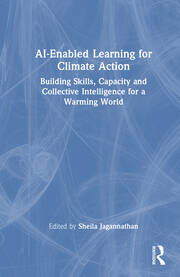
AI-Enabled Learning for Climate Action Building Skills, Capacity and Collective Intelligence for a Warming World
Theme 1: Setting the Stage: Why Digital Learning Matters for Climate Action 1. From Awareness to Action: Digital Learning in the Climate Era 2. AI-Driven Climate Education: Opportunities, Risks, and Competencies 3. Expanding Digital Citizenship in the Age of AI and the Climate Crisis Theme 2: Innovations and Applied Digital Solutions for Climate Learning and Resilience 4. Geospatial and Digital Systems for Climate Knowledge, Learning, and Decision-Making 5. Harnessing Generative AI for Climate Literacy 6. Teaching the Circular Economy with AI: Data-Driven Zero-Waste Systems 7. Harnessing Digital Technologies for Climate Action: Lessons from Asia and Africa 8. Gamification – Leveraging Serious Games for Climate Action Learning 9. Boosting Climate Services: Help Desks and Communities of Practice 10. Climate Action Capacity Building: Advancing Competencies, Access, and Accreditation for Working Professionals Theme 3: Youth, Communities, and the Future of Climate Learning 11. Generation Digital: Youth-Led Climate Learning and Action Through Technology (AI, VR, and Media Literacy) 12. Learning Climate Futures with Digital Twins: Community, Youth, and Systems Thinking 13. Learning as Climate Infrastructure: Enabling Action, Equity, and Scale
Biography
Sheila Jagannathan is Senior Advisor on Capacity Development at the African Development Bank, Vice President, Strategic Relationships at Saylor Academy, and Senior Research Affiliate (Skilling) at George Mason University. She is also former Global Head, Open Learning Campus, World Bank, Washington, DC.
“This book addresses the education challenge head-on. Dr. Sheila Jagannathan has assembled an outstanding group of scholars, practitioners, and innovators from across the world to examine how digital learning, artificial intelligence, and emerging technologies can accelerate the acquisition of the knowledge and competencies required for climate action.”
— Jeffrey Sachs, President of the UN Sustainable Development Solutions Network
“The climate crisis is fundamentally a learning challenge… This book by Sheila Jagannathan makes a compelling case that well-designed, inclusive digital learning can help close the gap between knowledge and action.”
— Anirudha Dasgupta, President & CEO, World Resources Institute
“This volume speaks to the evolving challenges of financing and implementing climate-smart infrastructure in a technology-enabled world. By weaving together digital learning, AI, and institutional capacity, it offers practical insight on how practitioners and policymakers can strengthen implementation, workforce capability, and long-term impact.”
— Ke Fang, Director General, Portfolio Management Department, Asian Infrastructure Investment Bank
“This book makes a powerful case for learning as a cornerstone of effective climate action. By harnessing digital learning, AI, and emerging technologies, it shows how countries and communities can build the capabilities needed to translate climate commitments into inclusive, sustained action—especially in low- and middle-income contexts.”
— Idah Pswarayi-Riddihough, World Bank
“This book approaches climate learning as a practical capability challenge for policymakers, not just an information exercise. By combining digital pedagogy, AI tools, and applied cases, it offers a valuable resource for strengthening climate decision-making and implementation.”
— Hai-young Yun (윤혜영), Professor, KDI School of Public Policy and Management, Korea Development Institute, GDLN Chairperson, Assistant Dean of External Relations
"This volume illuminates how technology—particularly AI—can be mobilized for real-world problem solving at global scale. It reframes digital learning itself as a dynamic, adaptive system essential for addressing the systemic challenges of complex problems like climate change.”
— Vijay Kumar. Senior Advisor to VP of Open Learning, Global Initiatives, MIT
"AI-Enabled Learning for Climate Action offers a timely and practical perspective on how learning systems can equip citizens and institutions with the skills required for climate-resilient development. By linking digital innovation with workforce readiness, inclusion, and institutional capacity, this volume provides valuable insights for countries seeking to align climate action with large-scale skills development."
— Ms. Debashri Mukherjee, Secretary, Ministry of Skill Development and Entrepreneurship, Government of India
"This volume makes a compelling case for learning as a foundational pillar of effective climate governance. By emphasizing digital learning, systems thinking, and institutional capability, it highlights how public institutions can better prepare professionals and leaders to address complex climate challenges. The book is a valuable resource for strengthening administrative capacity in a rapidly changing world."
— Mr. Shashi Ranjan Kumar, Secretary, Union Public Service Commission (UPSC), Government of India
“In my climate change adaptation class, we see the opportunities of using digital learning and AI to enhance the skills our students need. This volume has broken new ground in this much needed area of work. I am convinced it will have a major impact on this rapidly evolving practice. Its emphasis on digital learning and AI as tools for building climate-related skills and resilience speaks directly to the need for a just and inclusive transition.”
— Ede Ijjasz, Sr. Advisor Sustainable Development, Infrastructure, and Climate
