




1st Edition
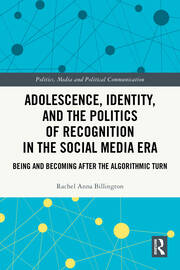
Adolescence, Identity, and the Politics of Recognition in the Social Media Era Being and Becoming After the Algorithmic Turn
Introduction
Recognition, adolescence, and (political) identity in the algorithmic era
The affective politics of digital media
Adolescent identity development online
Outline of book
1: Recognition theory, social media, and the dialectical moment
Recognition and identity
Honneth’s framework
Phenomenologies of misrecognition
Misrecognising the self
Identity politics
The dialectical moment
Culture wars as struggle
From polarisation to epistemic disjuncture
A fourth order of recognition: Epistemic
The normative potential of (an amended) recognition theory
Recognition as a radical endeavour
Conclusion
2: The hybrid lives of teens online
Hybrid ecologies
Tensions, transitions, and identity work
Digital affordances for belonging
Affective; collective; political
Toxic discursive environments
An algorithmically distorted recognition order
Conclusion
3: Researching recognition
Methodological framework
Perspectivism and representation
Storytelling/storylistening
Meaning-making, interpretation, and hermeneutics
Reflexivity and researcher positionality
Research methods
Phase one: Surveys
Phase two: In-depth interviews
Analysis
Conclusion
4: Affective orientations to the political
Social media as recognition machine
Social media adoption as a rite of passage
Fitting in
Performing belonging and signalling desirable traits
Performing the self as self-discovery
Affirming versus compensatory online practices
Mitigating loneliness
Identifying with a collective
Recognising the self in others
Constructions of us and them; ingroup norms and values
To be recognised is to be understood
Cancel culutre, self-silencing, and the fear of rejection
Conclusion
5: Digitally mediated identities
Autonomy-enhancing or autonomy-inhibiting?
Information-seeking, interests, hobbies
Enabling and inhibiting connection
Agency and intentionality
Addiction, wasted time, mindless scrolling
An emotional (sc)rollercoaster
Depression, anxiety, apathy
A question of consent: Unwanted exposure to distressing content
Environmental influences
Filter effects and epistemic autonomy
Symmetrical versus asymmetrical hermeneutic environments
The power of dialogue
Conclusion
Conclusion: Autonomy, ambiguity, and justice in the algorithmic age
Ambiguities in the liminal
Political orientations
Technologies of power
The normative and transformative potential of recognition theory
Biography
Rachel Anna Billington (Ngāi Tai ki Tāmaki) is a lecturer in the Media, Film and Communication Programme at the University of Otago, Ōtākou Whakaihu Waka. She lives in Ōtepoti Dunedin with her husband, stepkid(s), chickens, bees, and cat, and likes to use an em dash—despite its reputation.
“Billington's work contributes a timely exploration of social media as a rite of passage for young people, exploring the ways in which the 'agency' of algorithms and media both enhance and inhibit, aid and distort young peoples' relations and development. Without succumbing to technological determinism, she provides savvy and critical insights into the contradictions and complexities of contemporary mediated lives. Her approach is smart both theoretically and empirically, offering a seamless analysis of her original empirical research through the lens of affect, recognition theory, and epistemic injustice, arguing for scholars to understand social media as a "recognition machine" which in turn requires a focus on technojustice. For Billington, recognition theory provides a means for dissecting both how algorithmic dynamics entrench epistemic injustice, but also promise dialogue and reciprocity. Accessible, incisive, and smart, this book explores these critical and urgent questions with exemplary and impressive breadth, never sacrificing the complexity and nuance required to grasp the fraught and mediated experience of coming of age in the 21st century.”
Professor Megan Boler, University of Toronto
“Drawing on the perspectives and lived experiences of New Zealand teens, this book thoughtfully engages with the messy but fascinating truth about social media: these platforms simultaneously widen and narrow teens' agency in their quest to develop a sense of self and political identity.”
Professor Susannah Stern, University of San Diego
