





1st Edition
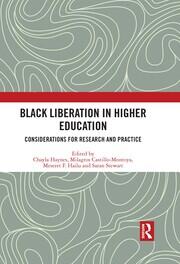
Black Liberation in Higher Education Considerations for Research and Practice
Introduction - Black Deprivation, Black Resistance, and Black Liberation: the influence of #BlackLivesMatter (BLM) on higher education
Chayla Haynes, Milagros Castillo-Montoya, Meseret F. Hailu and Saran Stewart
1. When the levees break: the cost of vicarious trauma, microaggressions and emotional labor for Black administrators and faculty engaging in race work at traditionally White institutions
Myntha Anthym and Franklin Tuitt
2. Teaching a transnational ethic of Black Lives Matter: an AfroCubana Americana’s theory of Calle
Amalia Dache
3. Student resistance movements in higher education: an analysis of the depiction of Black Lives Matter student protests in news media
Meseret F. Hailu and Molly Sarubbi
4. Racially liberatory pedagogy: a Black Lives Matter approach to education
Milagros Castillo-Montoya, Joshua Abreu and Abdul Abad
5. A message for faculty from the present-day movement for black lives
Chayla Haynes and Kevin J. Bazner
6. Theorizing Black women’s experiences with institutionsanctioned violence: a #BlackLivesMatter imperative toward Black liberation on campus
Lori D. Patton and Nadrea R. Njoku
7. Black Liberation research: qualitative methodological considerations
Saran Stewart and Chayla Haynes
Biography
Drs. Haynes, Castillo-Montoya, Hailu and Stewart are higher education scholars whose research examines how whiteness and anti-Blackness shapes the experiences of racially minoritized students and faculty and the role of faculty in creating more identity-affirming and racially-just campus learning environments.
