





1st Edition
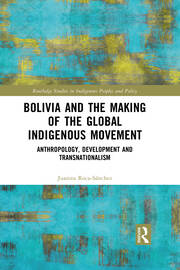
Bolivia and the Making of the Global Indigenous Movement Anthropology, Development and Transnationalism
Introduction: Labelling ‘the other’: anthropology, development and indigeneity
PART I: The Genealogy
1 The paradigm shift between social Darwinism and integration policies for Indians in Bolivia during the 1930s and 1940s
2 The integrationist paradigm for Latin America during the Cold War period: Indigenismo, anthropology and international development
PART II: From the Integrationist to the Indigenisation of Identities Paradigm
3 ‘For the liberation of the Indians’: The foundations of the global and the Latin American Indigenous Movement (1968–1975)
4 Anthropologists, international organisations and the establishment of the Global Indigenous Movement Network
PART III: The Indigenisation of Identities Paradigm in Bolivia
5 The emergence of ethnic politics and the paradigm shift towards the indigenisation of identities in Bolivia during the Cold War period and the early 1990s
6 The indigenisation of identities paradigm in Bolivia: Transnationalism, the Bolivian state, NGOs and international development
PART IV Ethnic Politics During the Twenty-First Century in Bolivia
7 Contested indigeneities in Bolivia at the turn of the millennium
8 The downfall of Evo Morales, the TIPNIS controversy, Post-Development and indigeneities
Conclusion
Biography
Juanita Roca-Sánchez is an independent scholar, researcher and consultant. She holds a PhD in Social Science (Anthropology and Development Studies) from CEDLA-University of Amsterdam-Netherlands. She was initially trained as a historian at Universidad de Chile in Santiago, and her master studies are in Anthropology and Development from the London School of Economics-UK and Public Management from the University of Potsdam-Germany.
