




1st Edition
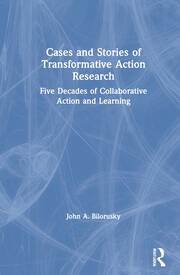
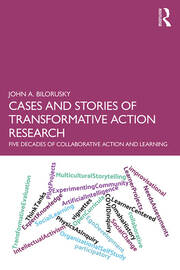
Cases and Stories of Transformative Action Research Five Decades of Collaborative Action and Learning
1. Introduction
Part I. Applications
2. Program Evaluations
3. Uses of Action research in Community Organizations
4. Community-Based Think Tanks
5. Toward Expert Knowledge and Human Development: The Curriculum of the "Experimenting Community"
6. Using Transformative Action-Inquiry during the COVID-19 Pandemic: Critiquing Studies and Facing Decision-Making Dilemmas
Part II. Illustrations
7. Intellectual Activism and Action research: A Case Study on Workplace Bullying
David Yamada, JD, PhD
8. Multifaceted, Comprehensive Action-Oriented Research Aimed at Preserving and Restoring the Omaha Culture
Dennis Hastings, PhD and Margery Coffey, PhD
9. Stories, Concepts and Methods of Participatory Action Research: Transforming Individuals and Groups
Sudia Paloma McCaleb, EdD
10. Getting Out of the Book and into the World: Ways to Understand Action Research
Marilyn Jackson, PhD
11. Teaching and Learning Physics as Inquiry: Similarities with Transformative Action Research
12. Plans for a School-Based Project to Involve Students as Teachers, Learners and Colleagues of Artificial Intelligence
Kence Anderson, BS and John Bilorusky
13. Stories of Action research from WISR Learners
14. Autobiographical Analysis of the Role of Social Learning in Transformative Action-and-Inquiry
Biography
John A. Bilorusky (PhD, University of California, Berkeley) is co-founder of the Western Institute for Social Research in Berkeley. For 45 years, as a faculty member there, he has guided hundreds of student action research theses, dissertations, and projects, and consulted with dozens of community agencies and colleges on action research.
"Building on a wide range of great thinkers --Thomas Kuhn on scientific creativity, Paulo Freire on learner-centered education, and John Dewey on learning--Bilorusky, the founder of the Western Institute for Social Research, lays out steps through which one can do transformative action research. Engaging communities of learning, his Institute has mentored highly innovative research on such issues as restoring Omaha Culture, ending workplace bullying, and teaching physics. The volume opens the door to an exciting approach to learning, collaboration and bettering the world." -- Arlie Hochschild, Professor Emerita of Sociology, University of California, Berkeley, USA. Author of Strangers in Their Own Land: Anger and Mourning on the American Right, a finalist for the National Book Award in 2016.
"Building on Volume I, this book dives deeper into WISR’s method of collaborative inquiry through illustrative case studies in which Dr. Bilorusky and his colleagues demonstrate how they have applied the principles of transformative, participatory action research in community organizations, community-based think tanks, needs assessments and other settings. Volume II will prove helpful for practitioners and students seeking to understand how democratic community knowledge-building takes shape in learner-centered approaches to learning." -- Joyce. E. King, Benjamin E. Mays Endowed Chair for Urban Teaching, Learning & Leadership, College of Education & Human Development, Georgia State University, USA. Past-President, The American Educational Research Association
"This exciting volume shows how teachers, undergraduate students, graduate students, and community members have collaborated and employed action research to promote social transformation. Connecting theory, methodology, and methods, these case studies provide instructive and inspiring examples of how multicultural academic scholarship, when crafted by students and learning groups, promotes social justice that benefits world-majority communities. Berkeley's Western Institute for Social Research is one of the few degree-granting, long-distance learning laboratories that teaches students around the world how to do action research for transformative justice. Students' skills and enthusiasm for collaborative inquiry will move readers to become more involved in multicultural community change." -- T. D. Dickinson, Professor Emerita, Gender, Women and Sexuality Studies, Kansas State University, USA
