




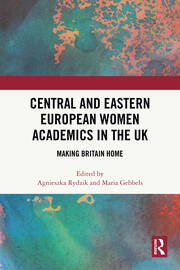
1st Edition
Central and Eastern European Women Academics in the UK Making Britain Home
Foreword
Anne White
Introducing the Multifaceted Journeys of Making Britain and Academia Home
Agnieszka Rydzik and Maria Gebbels
PART I: Finding Voice: Navigating Expressions of Identity
1. Desiring Silence and Liminal Identities: Negotiating the In-Between
Joanna Szupień
2. Beyond the Seams: Un/Belonging and the Migrant Experience
Sabina Fiebig Lord
3. Uncovering Invisible Lives: Writing the Histories of Hungarian Women Artists
Valéria Fülöp-Pochon
4. Blue Spaces and the Art of Being: Finding Stillness in the Tides of (an Academic’s) Life
Maria Gebbels
5. Out of Place? Reflecting on My Class and National Identity in the UK Higher Education Sector
Magda Mogilnicka
6. Don't Ask Me, Why I Won’t Come Back: On Being an Openly Autistic Academic Mother
Lula Męcińska
7. Where Are You From? Navigating the Complexity of Simultaneous Exclusion and Belonging
Tara [Gintare] Zaksaite
8. Polish, Scottish, Scouse? Navigating Migrant Experiences of Language, Identity and Emotions
Daria Izdebska
9. Living Language In Between: Slovene, English and the Pain of Imperfection
Ana Tominc
10. The Multidimensional Role of Language in Embracing Own Identities
Agnieszka A. Marciszewska
PART II. Carving Space: Trajectories of Migration and Academic Working Lives
11. Unable to Find a Home in the City I Now Call My Home
Manca Bajec
12. Spinning the Academic Wheel of Fortune: A Reflection from a Polish Female Scholar in the UK
Marta Wilczek-Watson
13. UK for Work, Czechia for Living? Reconciling Professional Ambitions and Opportunity Landscapes
Barbara Havelková and Zuzana Hrdličková
14. Casting the Anchor: (Re)Creating Home Across Two Countries
Agata Wężyk
15. Transnational (Re)rooting: Reconnection, Rest and Resistance Through Gardening
Agnieszka Rydzik
16. Will the Odds Ever Be in Our Favour? The Hopes of a Working-Class Migrant Navigating British Academia
Markéta Doležalová
17. My Procrastination Journey
Claudia Sima
18. Don’t Ask Me Where I’m from. Ask Me Where I’m a Local: Thriving in the Third Space in UK HE
Małgorzata Drewniok
19. Being a Slovak Teacher of English in Britain: On Language, Labelling and Politeness
Milada Walková
PART III. Negotiating Belonging: Everyday Experiences of (Un)welcome
20. Small Talk, Please: A Show-and-Tell of a Migrant's Home-Searching in England
Magda(lena) Szarota
21. Soundscapes of Belonging: Navigating Post-Brexit Academia as an Eastern European Migrant
Sandra Kazlauskaite
22. The Interplay Between Structure and Agency: Navigating Epistemological Belonging
Agnieszka Kubal
23. From Lingua Franca to Linguistic Assimilation: Communicating as a Polish Academic in the UK
Małgorzata Ciesielska
24. The Cat Who Tried to Avoid the Axe
Martyna Śliwa
25. Lost in Translation, Found in Connection
Dorota Marsh
26. Georgiana and the Dragon: A Personal Exploration of Place Attachment and Belonging in Contemporary Britain
Georgiana Els (Ciuchete)
27. The Impact of Upbringing on the Experiences of an Eastern European Female Academic in the UK: A Reflective Narrative
Katarzyna Werner-Masters
28. ‘You Need to Slow Down’: Negotiating Leadership Identity in UK Higher Education
Monika Foster
29. Invisible and Visible Borders: Creating Spaces of Belonging
Karolina Główka
Concluding Notes on Creative Reflexivity: From Deeply Personal to Collectively Resonant
Maria Gebbels and Agnieszka Rydzik
Index
Biography
Agnieszka Rydzik is Associate Professor at the University of Lincoln. She has published widely on gender, migration and work. She is currently leading a major British Academy-funded study into technological change and the future of hospitality work.
Maria Gebbels is Associate Professor at the University of Greenwich. She publishes on gender, career perceptions and critical hospitality; her research explores belonging, inclusion and unconventional applications of hospitality, including in carceral spaces and adventure tourism.
Migrant women’s search for their place and a new sense of self is particularly relevant in the context of the world today. I could see myself in this book. It really resonated with me and my experiences as a PhD student back in 2004-2010 in the UK. This is a very important collection sharing reflective, personal stories of women academics set against a backdrop of international politics. Making Britain Home is a necessary read, especially when academia is being challenged to meaningfully implement inclusivity and equal opportunities.
Karolina Zioło-Pużuk, Assistant Professor, The Cardinal Stefan Wyszyński University in Warsaw, Secretary of State, Ministry of Science and Higher Education, Poland
Stories of migration and mobility, of the search for belonging and (re)making of the self within academic as well as wider contexts of exclusion and othering are brought to life through personal-political reflections about work/life that are powerful, sometimes disturbing, but ultimately uplifting.
Sundari Anitha, Chair in Sociological Studies, University of Sheffield, UK
This ground-breaking collection of reflexive narratives encompasses themes of identity, belonging and placemaking. Told by Central and Eastern European women migrants in academia in Britain, the essays are a triumphant manifestation of resistance, resilience and joy. These women’s stories of ‘making Britain home’ will connect with you on a visceral level – they will make you cry but you will also laugh out loud with delight. These women’s stories emphasise that the personal is indeed political.
Donna Chambers, Professor of Critical Cultural Studies, Northumbria University, UK
This collection of poignant stories helps us to appreciate the challenges faced by female migrant academics across their private and professional lives, often during turbulent times. Above all, these reflective, personal essays show their capacity to exercise agency, offering hope to others within academia (and beyond) that solidarity, emotional intelligence and mentoring are powerful capacities that can help us to thrive. This relatable and instructive edited volume will remain important for future generations of social scientists, historians and to those seeking to understand the experiences of migrant female professionals.
Peter Lugosi, Professor of Culture and Organisation, Oxford Brookes University, UK
