




1st Edition
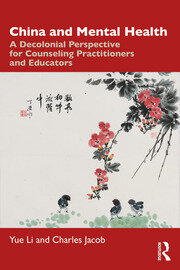
China and Mental Health A Decolonial Perspective for Counseling Practitioners and Educators
Introduction: A Decolonial Perspective for Counseling Practitioners and Educators in the Chinese Context Part I: Historic Overview of Mental Health and Healing Practices in China 1. A Brief History of Mental Health Attitudes: Shifting Interests and Developing Concerns 2. Cultural, Historical, and Scientific Views of Psychotherapy In China 3. Indigenous Chinese Healing: Perspectives and Practices Part II: Mental Health Services Across Settings in China 4. Mainstream Western Psychotherapy Theories in China 5. Psychiatry in China 6. School Counseling in China 7. Career Counseling and Work Culture in China 8. Couple and Family Therapy in China 9. Social Work and Mental Health in China Part III: Training and Education of Chinese Mental Health Professionals 10. Training and Education of Counseling Practitioners in China 11. Training Chinese Counseling Practitioners in the United States
Biography
Yue Li, PhD, is a feminist and decolonial scholar, professor, and psychologist at Roosevelt University. She also founded the Center for Intersectional Wellbeing in Chicago.
Charles Jacob, PhD, is a psychologist, educator, and research scientist who has held various academic positions and has been an invited speaker at universities and institutions throughout the world.
“This comprehensive edited book is a superb resource on mental health in China. The editors and chapter authors engage in a critical analysis to indigenize psychology and psychotherapy for Chinese people. As a result, they offer a decolonial orientation to provide a comprehensive view of mental health in China. I highly recommend this valuable resource.”
Lillian Comas-Díaz, PhD, clinical professor, George Washington University School of Medicine
“This book delivers a meaningful historical record of China’s psychological counseling and therapy development in practice and training. It also presents a noteworthy inquiry into traditional Chinese culture’s contributions to mental health thinking and its far-reaching impacts on multiple dimensions of mental health.”
Xiaoming Jia, PhD, president of the Clinical and Counseling Psychology Registration System of the Chinese Psychological Society, professor of counseling at the Beijing Institute of Technology
“This book provides impressive breadth and depth in understanding the history and contemporary practical exploration of mental health in China. The decolonial lens bridges Western perspectives and the rich Chinese traditions around holistic health and wellbeing. This is an excellent resource for scholars and educators interested in multicultural counseling, international psychology, and the global indigenous psychology movement!”
Guangrong Jiang, PhD, professor emeritus, School of Psychology, Central China Normal University
“A timely and essential contribution to the field of counseling and education! With a rich blend of historical insight and cultural depth, this book challenges Western-centric frameworks and invites readers to reimagine mental health through a Chinese lens. Designed with case studies and discussion questions in each chapter, this is as a valuable classroom resource for anyone committed to culturally responsive practice.”
Xiang Zhou, PhD, HSPP, associate professor of counseling psychology, Purdue University
