





1st Edition
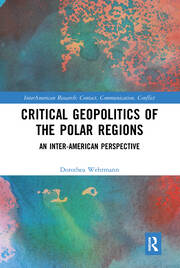
Critical Geopolitics of the Polar Regions An Inter-American Perspective
1 Introduction: Critical Geopolitics of the Polar Regions and an Inter-American Perspective
1.1 Significance of the Changing Polar Regions and of Polar Politics
1.2 Terminology
1.3 Structure of the Book
2 Investigating the Politics of the Polar Regions: Research Gaps and a New Perspective
2.1 The Polar Regions in Political Science Literature
2.2 A New Perspective: Entangled Actors and Discourses in the Politics of the Polar Regions
2.3 Identifying (Dis)Entangled Actors and Discourses
3 Practical Geopolitics: Representing the Changing Polar Regions in Regional and Domestic Politics
3.1 Regional Polities: Institutional Settings and Frameworks
3.2 Geopolitical Reasoning in Regional Politics of the Polar Regions
3.3 Geopolitical Reasoning in the Domestic Politics of the Polar Regions
4 Popular Geopolitics: The Changing Polar Regions in Newspaper Reporting
4.1 Newspaper Reporting in Argentina, Chile, Canada and the United States
4.2 Themes Mainly Addressed in Newspapers
4.3 Geopolitical Reasoning: The Representation of the Changing Polar Regions and Their Politics in Newspapers
5 Formal Geopolitics: The Changing Polar Regions in Assessments by Non-Governmental Theorists and Strategists
5.1 Non-Governmental Theorists and Strategists in the Politics of the Polar Regions
5.2 Geopolitical Reasoning: The Representation of the Changing Polar Regions and Their Politics by Non-Governmental Theorists and Strategists
6 Conclusions: Entangled/Disentangled Actors and Discourses in the Politics of the Polar Regions
6.1 Changing Political Influence? State and Non-State Actors in the Politics of the Polar Regions
6.2 Entangled Geopolitical Discourses in the Politics of the Polar Regions?
6.3 From Changing Polar Regions Towards a New Inter-American Political Space?
6.4 Further Prospects and Research
Biography
Dorothea Wehrmann studied Social Sciences with a major in Sociology, InterAmerican Studies and Political Communication at the University of Osnabrück and Bielefeld University (Germany). She holds a PhD in Political Science, is affiliated with the Center for InterAmerican Studies, the Institute for World Society Studies and the Bielefeld Graduate School in History and Sociology and works as a researcher at the German Development Institute/ Deutsches Institut für Entwicklungspolitik (DIE).
