




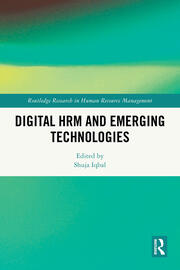
1: Introduction to HRM in the Digital Age
Shuja Iqbal
2: Digital Technologies Reshaping Recruitment and Talent Acquisition
Komal Khalid
3: Learning and Development in the Digital Era
Ahmed Abdul Hameed, Ambreen Jabeen Shah, and Arqam Javed Kayani
4: Performance Management in a Tech-Driven World
Saima Aftab
5: Enhancing Employee Engagement in the Digital Workplace
Shumaila Naz, Mohsin Ehsan Niazi, and Ambreen Jabeen Shah
6: The Evolution of Employee Expectations
Shuja Iqbal
7: Adapting HR Strategies to Remote Work and Flexible Arrangements
Shumaila Naz and Mohsin Ehsan Niazi
8: Globalization, Connectivity, and HRM
Muhammad Aamir Shafique Khan and Muneeb Ali
9: Strategic Human Resource Management in the Digital Age
Zuhaib Zafar, Imran Khan, and Shoaib Zafar
10: Conclusion: Navigating the Future of HRM and Digital Transformation: An Alignment to Sustainable Development
Shamim Akhtar
Biography
Shuja Iqbal holds a Ph.D. in management science and engineering from Jiangsu University, China. He is an Associate Professor at Shandong Xiehe University, Jinan, China, and an emerging researcher, journal reviewer, editor, and enthusiastic teacher.
Digital HRM and Emerging Technologies’ is a timely contribution to the field of human resource management. This book offers a comprehensive and research-driven exploration of how digital transformation is reshaping HRM theory and practice. Beginning with a strong conceptual foundation in digital HRM, the chapters systematically examine critical functions such as recruitment, learning and development, performance management, and employee engagement in technology-driven workplaces. The book is valuable in its treatment of remote work, flexible arrangements, globalization, and shifting employee expectations issues that are critical to contemporary and future organizations. Of particular significance is the concluding focus on aligning digital HRM with sustainable development, highlighting the role of HR in fostering long-term organizational resilience and responsible innovation. Overall, this book serves as an essential reference for researchers, educators, HR professionals, and policymakers seeking to navigate and lead human resource management in the digital age.
Prof. Abdul Karim Khan (Ph.D.), Professor of HRM/Organizational Behavior, College of Business and Economics, United Arab Emirates University, UAE
As a professor of HRM and Organizational Behavior, I am thoroughly impressed by the scope and depth of this book ‘Digital HRM and Emerging Technologies’. The contents of the book reveal a masterfully structured journey through the most pressing topics in the HRM today. It successfully bridges foundational theory with the practical imperatives of the digital age, offering clear, actionable insights into everything from AI-driven recruitment to fostering engagement in a dispersed workforce. This is an essential, forward-thinking guide that will undoubtedly equip both current and future HR leaders with the strategic mindset and tools needed to navigate and shape the future of work. Highly recommended for students, experts and leaders of modern HR.
Prof. Farooq Anwar (Ph.D.), Professor of HRM/Organizational Behavior, Pro-Vice Chancellor, NUR International University, Lahore, Pakistan
