





1st Edition
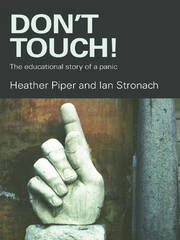
Don't Touch! The Educational Story of a Panic
1. Problematics of Touching 2. Relationships: Ethics Committees and Research Catherine Scott 3. The Criminal Record Bureau: Policing Access to Children 4. Guidelines and Dangerous Bodies: The Half-closed Door 5. Saving Touch: Private Parts and Public Wholes 6. Case Study: Early Years’ Settings 7. Case Study: Primary and Junior Schools Helen Lawson 8. Case Study: Secondary Schools Helen Bowen 9. Case Study: Considering Disability John Powell 10. Case Study: Summerhill School - an Exception to the Rule 12. Bonfire of the Inanities Heather Piper
Biography
Heather Piper is Senior Research Fellow in the Education and Social Research Institute of Manchester Metropolitan University.
Ian Stronach is Research Professor of Education in the Education and Social Research Institute of Manchester Metropolitan University.
"This very timely and worthwhile book deals with the 'moral panic' about professional adults and touch in school education... (it) explores one aspect that will make a difference and should be read by both professionals and policymakers. I applaud it. At around £20 it is worth every penny." -- ESCalate
"This is an extremely well-written book. The prologue clearly lays out the chapters and different contributors; the structure is effective with the different case studies demonstrating the increasing absurdity and inapplicability of the existing implicit ‘no touching’ policy in existence in many schools/systems in England (and elsewhere). The comprehensive endnotes and references provided sufficient assistance in helping the reader gain an understanding of the content...The quotes that were included from some of the interview participants and from other references were, I thought, carefully selected and most appropriate."--Ruth Rees, Education Review (July 2009)
