




Acknowledgements
How to use this book?
1. Translation and adaptation for dubbing
2. The professional environment
3. Traditional and modern layouts and their components
4. When words fit the lips: synchronization as the signature of quality dubbing
5. What shapes the language of dubbing? Calque, convention, legacy and constraints
6. Meaning in motion: multimodal interactions in audiovisual media
7. From script to screen: tools and tactics in dubbing adaptation
8. Quality control and dubbing technologies
9. Research in dubbing
Index
Biography
Frederic Chaume is Professor of Audiovisual Translation at Universitat Jaume I (Spain) and Honorary Professor at University College London (UK), Universidad Ricardo Palma (Peru) and Universidad Peruana de Ciencias Aplicadas (Peru), as well as an honorary member of the Colegio de Traductores, Peru. He serves as a consultant for streaming platforms and is the author of nine books, including Audiovisual Translation: Dubbing (2012).
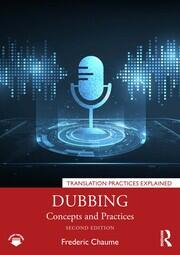
Dubbing: Concepts and Practices explores the history and global industry of dubbing, from lip-sync and cultural adaptation to cutting-edge technologies and professional practices. Packed with insights, strategies, and practical exercises, this essential book reveals how language, performance, and creativity merge to shape stories for audiences worldwide. Perfect for students, teachers, researchers, professionals, and curious cinephiles alike.
Jorge Díaz-Cintas, Centre for Translation Studies (CenTraS), University College London, UK.
A revisited edition exquisitely integrated and updated with the latest trends, theories, knowledge, and practices. It is thoughtfully woven into an engaging and authoritative volume. Certainly a must-read and must-have on the bookshelves of researchers, scholars, students, practitioners, and anyone passionate about dubbing—even if only a fraction as much as the author!
Giselle Spiteri Miggiani, Dubbing specialist & Academic, University of Malta
