




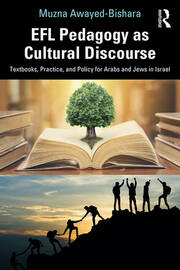

1st Edition
EFL Pedagogy as Cultural Discourse Textbooks, Practice, and Policy for Arabs and Jews in Israel
1. Introduction: Why English?
2. EFL Discourse: Beyond Language Education
3. EFL Textbooks as Ideological Vehicles
4. Storied Selves: Analysis of EFL Learners’ Cultural Representations
5. EFL Policy Discourse: Global and Local Perspectives
6. EFL as a Cultural Discourse: Towards a Transformative EFL Pedagogy
7. Closing Remarks: EFL as a Cultural Discourse of Action
Biography
Muzna Awayed-Bishara received her doctorate from the Department of English Language and Literature at the University of Haifa. She is currently a postdoctoral Fellow in the Centre for the Study of Multiculturalism and Diversity at the Hebrew University of Jerusalem, and a tenured lecturer in the English Department at the Academic Arab College for Education in Haifa. Dr Awayed-Bishara is also currently a visiting scholar at the Paulo Freire Institute at the University of California in Los Angeles.
"Finally a book that offers a multi-pronged approach to EFL, through a detailed critical discourse analysis of language in education policies, textbooks and interviews with language learners. A must read for everyone interested in the global/local dynamics of English, particularly with a view to imagining a future of hope in a context of conflict." — Tommaso M. Milani, Professor of Multilingualism, University of Gothenburg
"Teaching and learning English as a Foreign Language (EFL) may be compromised by becoming a cultural discourse reproducing difference and inequality. Though this claim seems controversial, the author presents a comprehensive and critical summary of her experience with EFL in Israel, and proposes an alternative reconstruction, moving EFL towards a critical pedagogy, a transformative cultural discourse of harmony, social justice and peace. Making EFL a central component in the struggle for global citizenship education in the global system, the rigorous critique and reconstruction, makes this book by Muzna Awayed-Bishara a must read in studies of cultural discourses and teaching English as a foreign language." — Carlos Alberto Torres, Distinguished Professor of Education, UNESCO UCLA Chair on Global Learning and Global Citizenship Education
