





1st Edition
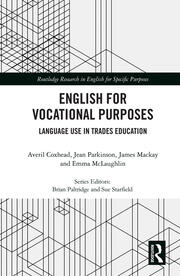
English for Vocational Purposes Language Use in Trades Education
List of Figures; List of Tables; List of Extracts; Acknowledgements; Chapter 1: Language in trades education and English for specific purposes; Chapter 2: The Language in the Trades Education project: Methodology; Chapter 3: Tutoring in trades education: Instruction and engagement in automotive technology classroom discourse; Chapter 4: Writing in trades education: The case of the builder’s diary; Chapter 5: A descriptive analysis of the use of visual elements in trades education texts; Chapter 6: Technical vocabulary in trades education; Chapter 7: Listening and speaking in trades education; Chapter 8: Reading in trades education; Chapter 9: Putting research into practice in trades education; Chapter 10: Reflections, implications, and directions in trades education research; Appendix 1; References; Index
Biography
Averil Coxhead is an Associate Professor at the Victoria University of Wellington, New Zealand.
Jean Parkinson is a Senior Lecturer at the Victoria University of Wellington, New Zealand.
James Mackay is a Principal Academic Staff member at the School of Engineering, Wellington Institute of Technology (WelTec), New Zealand.
Emma McLaughlin is a Learning Advisor at Te Wananga o Aotearoa, Porirua campus, New Zealand.
