





1st Edition
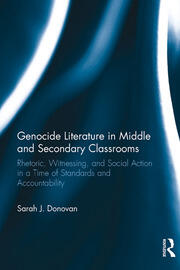
Genocide Literature in Middle and Secondary Classrooms Rhetoric, Witnessing, and Social Action in a Time of Standards and Accountability
By Sarah Donovan
Copyright 2017
168 Pages
by
Routledge
178 Pages
by
Routledge
178 Pages
by
Routledge
Also available as eBook on:
At the heart of this inquiry into the ethical implications of education reform on reading practices in middle and secondary classrooms, the central question is what is lost, hidden, or marginalized in the name of progress? Drawing on her own experiences as an English teacher during the No Child Left Behind era, the author examines school cultures focused on meeting standards and measurable... Read more
Contents
Preface
Part I: Mandates
- The Education of a Teacher: The First Year
- Reading and Meeting a Mandate to Study Genocide
- The Rhetoric of the Word: A Case Study of Bosnia Herzegovina
- Reading Testimony: Witnessing and the Witness
- The Rhetoric and Aesthetic of Fiction in Genocide Literature
- The Ethics of a Child Narrator
- Emotional Appeals, Trauma, and Aesthetic Pleasure
- Rational Appeals and Didacticism
- The Writing Workshop
- Whole-Class Reading, Research, and Activism
- The Reading Workshop
- Assessment: No More Numbers and Letters
- Conclusion: The Education of a Teacher Continues
Part II: Rhetoric, Witnessing, and the Witness
Part III: Rhetorical Appeals in Fiction
Part IV: Into the Classroom
A Teacher’s Testimony: Michael Krzysztofiak
A Teacher’s Testimony: Elaine Vogel
A Teacher’s Testimony: Sumer Samano
A Teacher’s Testimony: Amy Estanislao
Biography
Sarah J. Donovan teaches middle school English in a suburb of Chicago, Illinois, USA, and is an adjunct at DePaul University (Social and Cultural Foundations in Education), USA.
