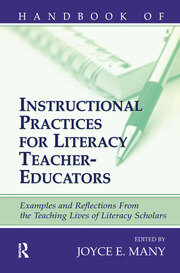
Contents: Preface. Part I: Reading. D. Wiseman, Two Views Presentations: Demonstrating the Differences Between Theoretical Orientations in Reading Instruction. S. Pasquarelli, R. McCormack, Matching Standards With Substance: Preparing Preservice Teachers to Teach Literacy. S. Oran, K.B. DeMarrais, J. Lewis, Social Foundations as a Foundation for Literacy Instruction: An Effort in Collaboration. V. Purcell-Gates, Comprehension of Text: The Reader/Text Relationship. T.E. Raphael, The Book Club Workshop: Learning About Literacy and Culture Through Autobiography. Part II: English/Language-Arts. J. West, Teaching of Communication Arts. D. Cooner, D. Wiseman, Writing Buddies: Linking School and University Teachers in Language Arts Methodology Instruction. J. Allen, Whole Language Teaching in Elementary and Middle School. N. Farnan, Teaching and Learning in the English Language Arts. P. Smagorinsky, Preservice Secondary Language Arts Teaching Methods. P. Albers, Oral and Written Communication. D. Schaafsma, Teaching of Writing as Story. Part III: Literature and the Teaching of Literature. K. Short, C. Anderson, The Art of the Picture Book. L. Galda, Children's Literature in the Curriculum. P. Enciso, Mediating Multicultural Children's Literature. V. Harris, Teaching Multicultural Children's Literature: Struggling With Aesthetic, Educational, Political, and Cultural Change. B. Probst, Adolescent Literature and the Teaching of Literature. Part IV: Emergent Literacy. L.M. Morrow, Literacy Development in the Early Years. M. Matthews, Research and Theory for Constructivist Leadership in Early Childhood. D. Yaden, A. Chavez, C. Cubillas, Encounters With Print: Beginnings of Reading and Writing. Part V: Content Area Literacy. C. Lloyd, Reading for Secondary Teachers. V. Ridgeway, Secondary Content Area Reading. T. Bean, Content Area Literacy. Part VI: Literacy Assessment and Instruction. P. Freppon, Assessment and Instruction in Literacy Courses and a Tutoring Practicum. S. Stahl, Reading Diagnosis and Remediation. R. Tierney With L. Lawson, E. Marshall, Learner Centered Assessments for Preservice Classroom Teachers. Part VII: Language and Literacy in a Diverse Society. J. Hoffman, R. Salas, B. Patterson, Community Literacy. J. Marshall, Language and Learning. M. Smith, Creating a Common Project in the Study of Diversity. R. Hough, Methods and Materials for the Bilingual/ESL Teacher. Part VIII: Literacy and Technology. L. Labbo, D. Reinking, Computer-Based Instruction in Reading Education. D. Reinking, Topics in Computer-Based Reading and Writing. Part IX: Inquiries Into Literacy, Theory, and Classroom Practice. L. Patterson, Action Research in Educational Settings. C. Leland, J. Harste, Creating Curricular Invitations: Reading, Writing, and Inquiry. J. Hoffman, The History of Reading Instruction. R.E. Ferdig, P.D. Pearson, Negotiating a Syllabus for a Doctoral Course in the Psychology and Pedagogy of Literacy. J.E. Many, Trends and Issues in Literacy Education.