




1st Edition
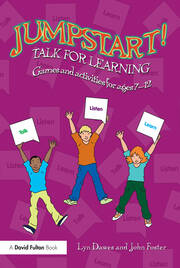
Jumpstart! Talk for Learning Games and activities for ages 7-12
Introduction
The importance of talk in the classroom. Why classroom talk can be a part of a productive learning environment.
How understanding is developed through speculating, hypothesising, imagining and exploring ideas.
The importance of listening and responding to what others say. Developing children’s skills so that they become active listeners.
Section 1
Talking to convey information:
Informative talks
Recounting experiences
Reporting events
Researching and reporting
Explanations
Instructions and directions.
Section 2
Expressing opinions and arguments:
Expressing opinions
Points of view
Developing arguments
Discussion
Preparing speeches
Debating
Persuading
Section 3
Using talk imaginatively to develop understanding
Telling and retelling stories
Learning and presenting poems
Hot seating and thought tracking
Role play
Improvisation
Assessing Speaking and Listening
Assessing the content, structure, language and delivery of talks and speeches
Assessment of group discussions
Assessment of storytelling and poetry presentations
Assessing listening skills
Biography
Lyn Dawes is a consultant in Spoken Language in the Primary Years, previously Senior Lecturer in Education at the University of Northampton, UK and visiting lecturer at the University of Cambridge, UK.
John Foster taught English for 20 years before becoming a full-time writer. He has written over 100 books for classroom use and is a highly regarded children’s poet.
"Perfect for a staffroom library, this book offers a multitude of stimulating ideas and is bound to spark off discussion among teaching staff." - Sarah Brew, Parents in Touch
