



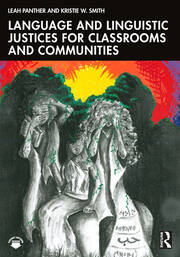
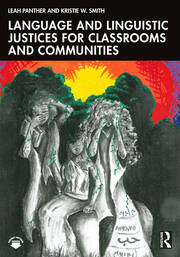
1st Edition
Language and Linguistic Justices for Classrooms and Communities
Section I: Language and Linguistic Justices 1. Language and Linguistic Justice(s) 2a. Languages and Linguistic Justice(s) from Research to Practice (American Sign Language Version) 2b. Languages and Linguistic Justice(s) from Research to Practice (English Version) 3. Unapologetically Black: Learning, Unlearning, and Relearning about Language and Race 4. Place (and its History) Matters 5. Archiving and Preservation to Sustain Section II: Language and Linguistic Justices in Classrooms 6. English Language Arts 7. Leveraging Science of Reading to Teach Local Languages 8. Critical Thinking, Power, and Creative Insubordination in World Language Education 9. Language Justice and a “Dead” Language 10. Expanding Standards with Texts to Teach Local Histories 11. Beyond Technology and the Linguicism of AI 12. Restorative Justice and Linguistic Empathy Section III: Language and Linguistic Justices in Communities 13. Positionality, Fugitivity, and Collectivism: Sustaining Critical Teaching in an Era of Curricular Censorship 14. Entering Spaces with (Historical) Empathy 15. Institutional Failures, Hard Histories, and Intergenerational Collaboration 16. School Leadership for Linguistic Justice 17. Family Literacies 18. Language and Linguistic Justices Past, Present, and Future Appendix A: Tracing Language and Race in Education Across History
Biography
Leah Panther is an Associate Professor of Literacy Education at Mercer University in Atlanta, Georgia.
Kristie W. Smith is an Assistant Professor of English Language Arts (ELA) Education in the Department of Secondary and Middle Grades Education at Kennesaw State University of Kennesaw, Georgia.
“If you’ve ever wondered what it looks like to move beyond allyship and become an accomplice—someone who works alongside marginalized communities in meaningful ways—this book offers a powerful example. At once grounded, incisive, and practical, it shows that real solidarity is built through sustained action in purposeful partnerships.”
--Alexandra (Ale) Babino, Associate Professor of Literacy & Language, Texas Woman’s University“Language, race, history, place. Language and Linguistic Justices in Classrooms and Communities explores these themes through creative examples of linguistic justice in/with marginalized communities. This book is an invaluable guide to participatory collaboration that unapologetically centers the place-based nature of languages to reimagine linguistic justice in a time of increased injustice.”
-- Kindel Turner Nash, Spangler Distinguished Professor of Early, Appalachian State University“Language and Linguistic Justices... untangles language from the literacy matrix, weaving it with history, power, and place. This essential resource provides educators and researchers with a valuable foundation and practical applications—empowering K-12 and higher education teachers with opportunities to critically reflect and authentically support all students’ diverse language varieties.”
-- Roberta Price Gardner, Associate Professor of Reading and Literacy Education, Kennesaw State University
